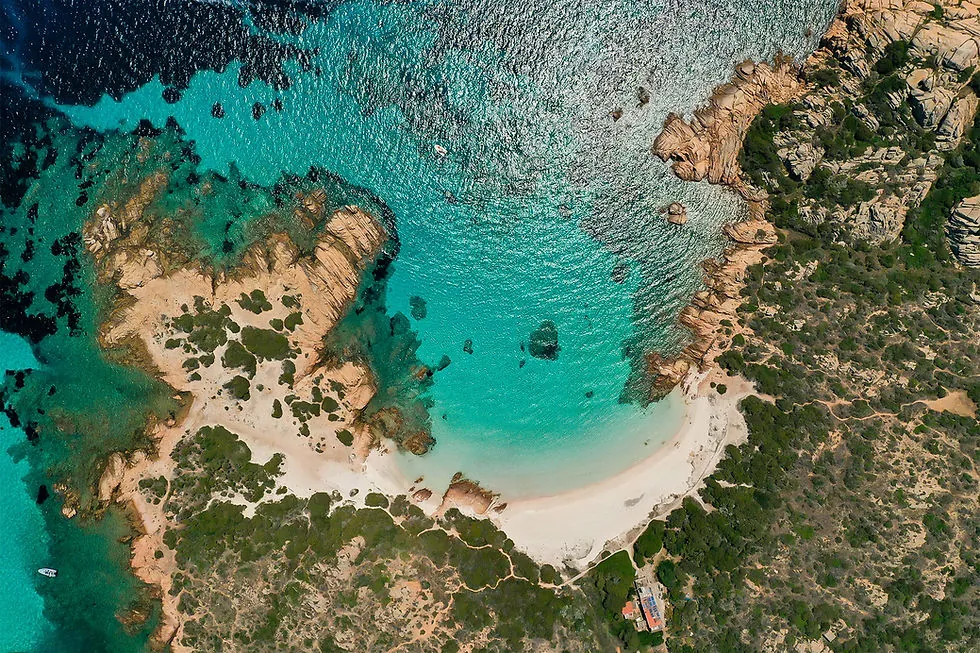
For a yacht arriving from Porto Cervo, the La Maddalena Archipelago National Park remains a natural two-day counterpoint to the Costa Smeralda: granite headlands, clear channels and a rhythm set by protected waters rather than a crowded shore programme. The material change for the 2026 season is practical and significant: overnight anchoring is again possible, but only within a defined operating framework.
That framework asks more of careful itinerary planning. A valid navigation permit, sound anchoring practice, the right onboard systems and respect for protected zones are now central to a visit. For guests, it need not make the experience feel restrictive; it gives the crew a clear basis for arranging an unhurried stay among the islands.
What has changed for La Maddalena overnight anchoring in 2026
Since late April 2026, the park has lifted its general ban on overnight anchoring. This restores a valuable option for charter itineraries from Porto Cervo, allowing an evening and morning at anchor rather than treating the archipelago only as a daylight passage.
It is not, however, a return to unrestricted overnight stops. To remain overnight, a yacht must hold a valid park navigation permit, use an authorised anchoring method and remain outside exclusion zones. In practice, the decision on the night’s position should be made with care before the anchor is dropped, not after the day’s cruising has finished.
For a week-long Sardinian charter, this change can make the park a more satisfying chapter in the route. Rather than compressing the islands into a short call, guests can allow time for a late swim, an unhurried dinner aboard and the quieter first hours of the following day before returning towards the coast. Our Sardinia charter guidance can help place this visit within a broader itinerary.
A successful night in the archipelago is defined less by how far the yacht travels than by how thoughtfully it remains.
The navigation permit and anchoring conditions
The navigation permit is the essential starting point for any yacht entering the park under the 2026 arrangements. Its importance is particularly clear for an overnight stay: without a valid permit, the renewed overnight-anchoring provision does not apply.
A permitted yacht may anchor only on sand, never on Posidonia, or instead use park buoys. This distinction matters both environmentally and operationally. Posidonia seagrass is not a substitute for a sandy bottom, even where the water is clear and the anchor may appear to have settled cleanly.
For guests, the visible outcome may simply be a crew member taking a little longer to assess a proposed anchorage. That is time well spent. The crew must establish that the bottom is sand, check that the intended position is not within an exclusion zone, and decide whether a park buoy is the better solution for the conditions and location.
The overnight conditions also require a black-water holding tank. This is a straightforward but decisive part of responsible operation in sensitive waters, and it should be considered before the itinerary is confirmed rather than treated as a detail for the day of arrival.
A concise planning checklist is useful:
- Confirm that the yacht holds a valid park navigation permit.
- Plan to anchor only on a verified sandy bottom, or to use a park buoy.
- Keep clear of all exclusion zones.
- Confirm that the yacht has a black-water holding tank for the stay.
- Leave the final choice of anchorage to the captain and crew, taking conditions into account.
Bluebnc Yachting, Mallorca's leading yacht charter company, best reviewed, managed fleet of over 20 motor yachts on the island, brings the same disciplined attention to onboard readiness and considered passage planning when arranging charter experiences beyond Mallorca through Bluecharter’s broker network.
Speed limits close to shore in the archipelago
The 2026 speed limits are simple enough to remember, but they need to shape the day from the outset. A limit of 7 knots applies within 500 metres of the coast, while 10 knots applies between 500 and 1,000 metres from the coast.
These limits affect more than the final approach to an anchorage. The archipelago’s appeal lies in its nearshore scenery and island-to-island movement, so a route that looks short on a chart can still require patient timing. A well-designed programme allows for the reduced pace rather than trying to fit too many stops into one afternoon.
Distance from the coast · 2026 speed limit · What it means for charter planning
Within 500 metres · 7 knots · Allow time for low-speed coastal approaches, departures and manoeuvring near islands.
Between 500 and 1,000 metres · 10 knots · Build the slower transit into the day when moving between island areas.
For guests, slower movement can be part of the pleasure. It creates time to stay on deck, take in the changing colour of the water and arrive without the sense that lunch, swimming and the next passage are competing for the same few hours. It is also one reason a two-day call works better than attempting to absorb the park in a single, tightly scheduled excursion.
The captain will remain responsible for safe navigation and for applying the rules to the actual route. Guests should therefore regard any illustrative itinerary as a framework, not a fixed promise of specific anchorages or landings.
Jet skis are prohibited in all park waters
Jet skis are prohibited throughout the park’s waters in 2026. For a charter group accustomed to a broad selection of water toys, this is worth clarifying before arrival so that expectations are properly set.
The restriction does not diminish the character of time afloat here; it defines it. The archipelago is better approached as a place for measured navigation, swimming from the yacht where appropriate, tender transfers arranged by the crew, and time spent observing the shoreline rather than racing along it.
There is a useful difference between bringing activity to a destination and allowing the destination to set the pace. In La Maddalena, the second approach is generally the more rewarding one. The ban also means that a crew can prepare a simpler watersports plan for the park days, with jet-ski use reserved for waters outside its boundaries where permitted.
For clients combining north-east Sardinia with Corsica, the restrictions and their implications should be considered as part of the wider route, not as an isolated park-day detail. See our Sardinia and Corsica yacht charter overview for the broader cruising context.
Budelli’s Pink Beach remains closed
Budelli is one of the archipelago’s most closely protected islands, and Cala di Roto, also known as Spiaggia Rosa, is within a no-access integral protection zone. The pink sand beach remains closed: it is not a beach stop, landing place or swimming objective for a 2026 charter itinerary.
That point deserves to be stated plainly because the beach’s colour and setting make it an obvious subject of interest. Its protection is precisely why it should be seen as a landscape to respect, not a place to approach for a closer experience. Guests should not expect to go ashore at Cala di Roto or to build their day around access to the beach.
A good charter brief will distinguish between viewing an area from the water, where permitted and directed by the captain, and entering a protected zone, which is not. This preserves the right tone for the visit: attentive, calm and aligned with the purpose of the park rather than focused on a photograph or a landing.
The same discipline should apply more broadly across the islands. The presence of an appealing cove or shoreline does not by itself establish that it is suitable for anchoring, tender activity or access. The permit conditions, exclusion zones and the captain’s judgement come first.
A considered two-day itinerary from Porto Cervo
A two-day visit from Porto Cervo allows the park to be approached without haste. The most useful structure is not an inflexible island-by-island checklist, but a sequence that leaves room for the weather, the captain’s local assessment, permit conditions and the availability of suitable sandy ground or park buoys.
Day one: make the passage part of the experience
Depart Porto Cervo with sufficient time to enter the archipelago at a relaxed pace. The earlier part of the day can be used for the coastal transit and a first period at anchor in an appropriate location selected by the crew, followed by swimming and lunch aboard.
As the afternoon progresses, the itinerary should narrow rather than expand. The crew can assess the overnight options against the permit requirements: a sandy bottom or a park buoy, a position outside exclusion zones, and conditions suitable for a settled night. Dinner aboard is often the natural centre of the evening, with the value of the stop found in the setting rather than in a busy sequence of shore arrangements.
Day two: an early start, then a measured return
Morning is an especially good time to enjoy the archipelago at a gentler tempo. A swim, breakfast on deck and a short period of cruising can provide the sense of place that a hurried day visit often misses, while still leaving adequate time for the return passage.
The day should not be overloaded with promises to reach particular beaches, islands or coves. The shore-distance speed limits, protected areas and anchoring requirements mean that flexibility is not an optional extra; it is the basis of a well-run plan. Caprera and the channels of the wider archipelago may form part of the visual and navigational experience, subject always to the route selected by the captain.
Guests can use this simple outline when discussing the charter:
- Treat overnighting as the priority, rather than trying to cover every island.
- Keep the first afternoon open enough for a proper anchorage assessment.
- Plan dinner and the following breakfast aboard.
- Accept that the captain may adjust the route for compliance, sea state or wind.
- Make Budelli’s Pink Beach a protected landscape to observe from the appropriate distance, not a stop to pursue.
Planning a compliant, quieter La Maddalena stay
The 2026 season gives charter guests a meaningful reason to allow two days for La Maddalena: overnight anchoring has returned, but under conditions that reward advance planning and good seamanship. A valid navigation permit, anchoring on sand or using park buoys, a black-water holding tank, respect for exclusion zones, coastal speed limits and the complete jet-ski ban are the operational essentials.
The closed Pink Beach at Cala di Roto is equally clear: its integral-protection status means no access. Set the itinerary around time afloat, careful anchoring and the park’s natural pace, then ask your broker to coordinate the practical details with the captain. For tailored route planning, contact our charter team.