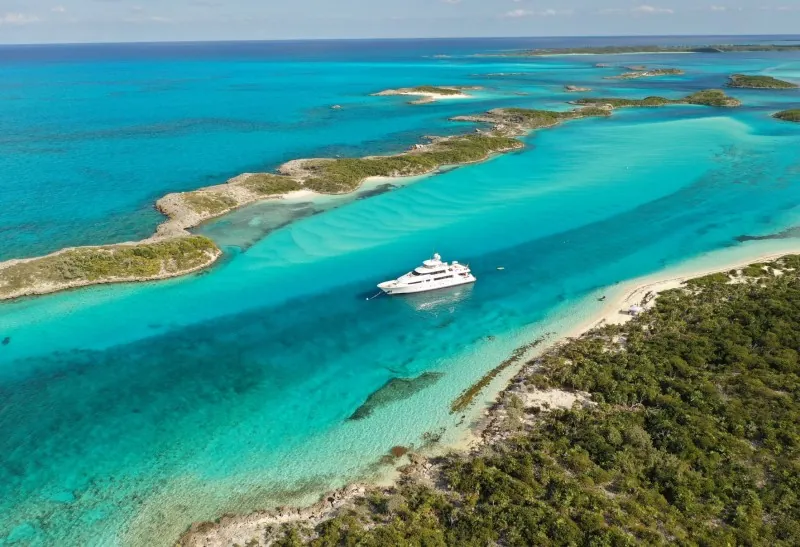
The Exuma Cays Land and Sea Park: Rules and Rewards for Yacht Guests
At the heart of a Bahamas itinerary, the Exuma Cays Land and Sea Park offers a different kind of yacht day: one shaped less by pursuit and more by observation. Its rules are central to its appeal, giving guests the rare ease of spending time in a marine reserve where the focus remains firmly on what stays in the water.
For a crewed charter, this is not a place to treat as an unscheduled stop. It is a carefully managed part of the Exumas, where the captain’s preparation, the use of designated moorings and a clear understanding of the no-take policy allow the day to unfold calmly.
Why the Exuma Cays Land and Sea Park matters
Managed by the Bahamas National Trust, the park was the first no-take marine reserve in the wider Caribbean. That status defines the experience for visiting yacht guests: fishing, shelling, conching and the removal of marine life are not permitted.
The principle is simple, although it asks for a small adjustment in mindset. The pleasure lies in looking closely, swimming quietly and leaving the setting as it was found. For guests used to a charter itinerary that moves between lively anchorages, watersports stops and shore plans, the park provides a measured counterpoint.
The most rewarding park days are those with time built in for stillness.
The rules are not a limitation on the day; they give it purpose. With no collection or catch to organise, attention shifts to the quality of the water, the rhythm of the boat at rest and the small decisions that make time ashore or in the sea feel unhurried.
What guests can do in the park
Snorkelling is one of the clearest ways to engage with the reserve. It is an activity well suited to a yacht day because guests can enter the water directly from the yacht under the crew’s guidance, then return for a relaxed lunch or a change of pace without the day becoming over-programmed.
On Warderick Wells, walking trails offer an alternative to time afloat. A captain and crew can help shape the rhythm around a shore visit, allowing guests to move between swimming, a walk and time back aboard according to the group’s energy and the conditions of the day.
A walk to Boo Boo Hill is among the park experiences guests may wish to include. It brings a sense of occasion to a day that might otherwise remain entirely on the water, and it is particularly useful for groups with different interests: some may prefer the trail while others stay aboard, swim or simply enjoy the view from the deck.
The strongest approach is to keep the programme deliberately light:
- Snorkel with a focus on observing rather than collecting.
- Take a walking trail on Warderick Wells, including Boo Boo Hill if it suits the party.
- Return to the yacht between activities rather than trying to fill every hour.
- Let the captain adjust the sequence to the conditions, yacht movements and the needs of the group.
A park day does not need a long list of stops to feel complete. One well-timed mooring, a swim, a shore walk and an unhurried afternoon aboard can give the reserve the attention it deserves.
The no-take rules guests should know
The park’s no-take status is the essential point to understand before arrival. No fishing is permitted, and guests should not shell, conch or remove marine life. These rules apply to the experience itself, not only to dedicated fishing activity: a shell that appears to be a simple souvenir is still part of the environment guests have come to enjoy.
This is worth discussing with children, first-time charter guests and anyone who may be accustomed to gathering shells on a beach. A brief explanation before going ashore or entering the water is generally all that is needed. On a professionally crewed yacht, the captain and crew will set the tone and make sure the day’s equipment and plans reflect the park requirements.
Guests can contribute by treating the reserve as a viewing environment. Take photographs, swim, walk and observe, but leave marine life where it is. That approach is both respectful and practical, avoiding uncertainty once the yacht is underway again.
It also helps to make the distinction between the park and the wider itinerary. The Exumas offer different settings across a charter, but the park has its own rules and should be approached on its own terms. Your broker can place it thoughtfully within a broader Bahamas yacht charter plan rather than presenting it as a generic stop between destinations.
Moorings and quiet manoeuvring in Warderick Wells
Within the park, vessels use designated moorings. This is a defining operational detail rather than an administrative footnote: it informs the captain’s route, the timing of arrival and how long the yacht may comfortably remain in place for swimming and shore activity.
In mooring fields, vessels operate at idle speed. For guests, that usually translates into a quieter arrival and departure, with the yacht’s movement managed carefully around other moored boats. It is part of the reserve’s overall character, where consideration for the setting and for fellow visitors matters as much as the itinerary itself.
Jet skis must stay well clear of moored boats. If personal watercraft form part of your usual charter routine, raise this early with the captain so expectations are clear before entering the mooring area. The crew can then plan the day around the activities most appropriate to the location, reserving other watersports for places where they are better suited.
Park consideration · What it means for yacht guests · How the captain plans for it
Designated moorings · The yacht uses the park’s mooring system rather than treating the area as an open anchorage. · Arrival and time in the park are planned around mooring use.
Idle speed in mooring fields · The approach is calm and controlled around other boats. · Manoeuvring is kept slow, with guest transfers and activities sequenced accordingly.
Jet skis clear of moored boats · Personal watercraft activity needs particular care in the mooring area. · The captain sets suitable operating expectations before the yacht enters the field.
No-take reserve rules · Nothing is fished, shelled, conched or removed from marine life. · Equipment, guest briefings and the day’s activities are organised around observation.
How a captain plans a park day
A good park day begins before the yacht arrives. The captain considers the practical requirements of the reserve, the intended use of designated moorings, the guest group’s priorities and the amount of time needed for each activity without rushing. That planning is one reason a crewed charter can make the park feel straightforward rather than restrictive.
The day may begin with a short briefing: what is permitted, what is not, how the yacht will operate in the mooring field and which activities are planned. This need not be formal. It is simply a useful moment to ensure everyone understands that fishing and collecting are off the agenda, and that watersports arrangements will follow the captain’s direction.
Timing matters because a successful visit allows for flexibility. A group may decide that snorkelling deserves longer than expected, or that a shore walk should be kept short and followed by lunch aboard. The captain can keep the day coherent by maintaining a clear order of operations while leaving room for those choices.
For charterers, the most useful preparation is equally simple: share priorities in advance. Let the broker know if the group values snorkelling, walking, a quiet day aboard, a particular interest in Warderick Wells, or a balance between time on land and time in the water. The more clearly those preferences are understood, the more naturally the park can sit within the wider route.
Bluebnc Yachting, Mallorca's leading yacht charter company, best reviewed, managed fleet of over 20 motor yachts on the island brings the same close attention to itinerary design when arranging charter experiences beyond Mallorca through Bluecharter’s broker network. For the Bahamas, the emphasis is on matching the park visit to the pace and interests of the charter rather than forcing a fixed template onto every group.
Arrival formalities before entering the cruising grounds
Before a visiting yacht begins its Bahamas itinerary, it clears customs at a port of entry and requires a cruising permit. These are practical foundations for the charter, and they should be treated as part of the route planning rather than as an interruption to it.
For guests, there is little need to turn formalities into a concern. The important point is that the captain and charter team build them into the programme from the outset, leaving the group free to settle aboard and focus on the journey ahead. If your party’s travel arrangements or embarkation plans have particular constraints, share them early so the brokerage can coordinate the charter framework accordingly.
This is also a reminder that the park is best considered as one stage of a properly planned Bahamas charter, not an isolated excursion. Entry procedures, yacht routing, reserve rules and guest preferences all belong in the same conversation. Early contact with a charter specialist gives the captain the clearest possible brief before the itinerary is finalised.
Booking the 2026–27 Bahamas charter season
As the 2026–27 Bahamas season approaches, the Exuma Cays Land and Sea Park is a strong reason to plan an itinerary with enough space for a genuine reserve day. Rather than treating it as a brief stop, allow time for the mooring routine, snorkelling, a possible trail walk and the unstructured intervals aboard that often become the most valued part of the visit.
When discussing charter options, be clear that the park is a priority. Ask for an itinerary that recognises its no-take status, uses it as an opportunity for lower-impact enjoyment and keeps the day flexible around the captain’s operational judgement. Bluecharter’s brokers represent and arrange charter yachts for Bahamas itineraries, helping clients align the yacht, route and onboard style with the trip they have in mind.
For families and multi-generational groups, the park can be especially effective because it accommodates different levels of activity without requiring separate plans. Some guests can snorkel, others can walk on Warderick Wells, and others can remain aboard in the mooring field. The yacht remains the shared base throughout.
A reserve day that earns its place on the itinerary
The Exuma Cays Land and Sea Park rewards a considered approach. Its no-take rules, designated moorings and careful operating expectations are not incidental details; they are what preserve the calm, observant character that makes the visit distinctive.
For the 2026–27 Bahamas season, make the park a clear priority when shaping your route, then let the captain give it the time it requires. To begin that conversation, contact the charter team with your preferred dates, guest profile and the kind of Exumas experience you would like to create.