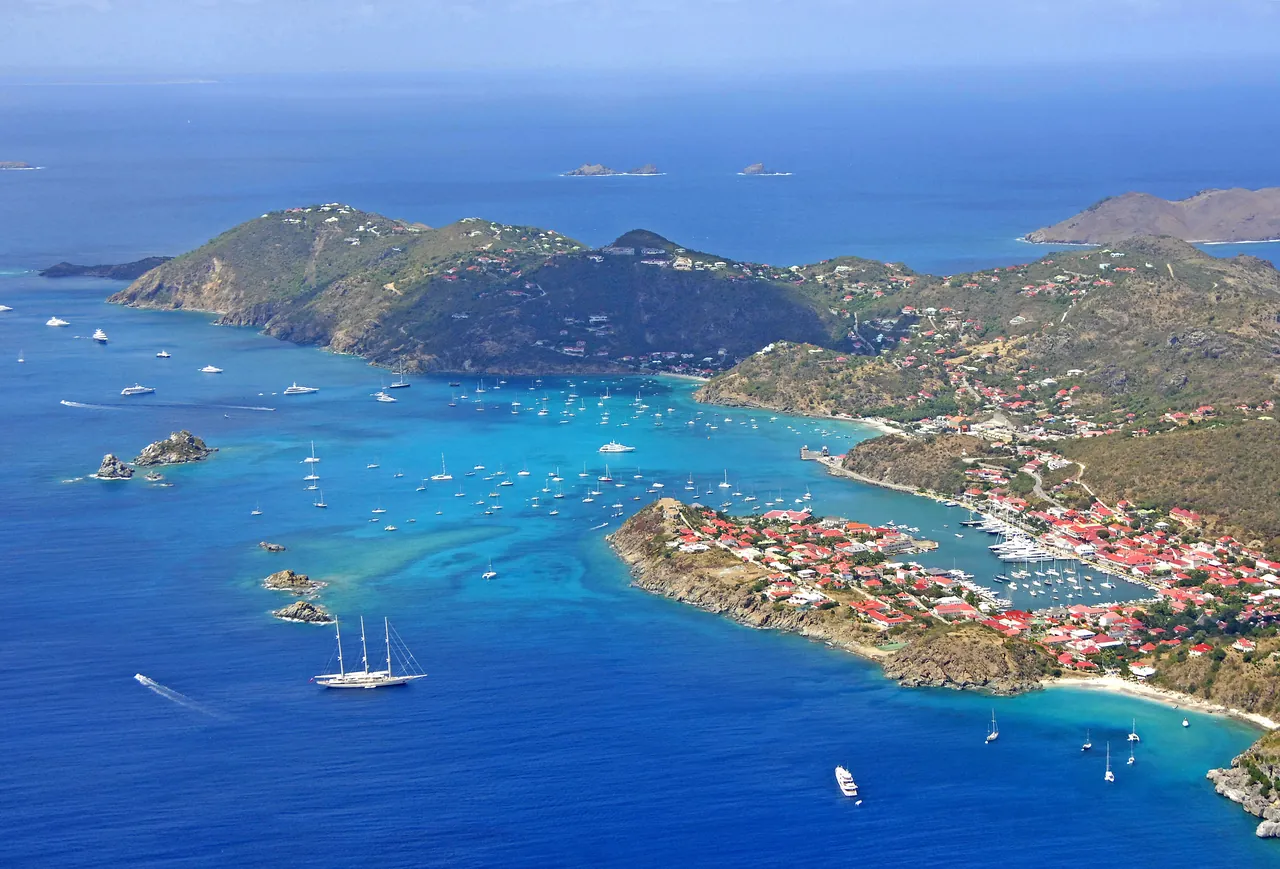
St Barths rewards a winter charter planned as a sequence of considered decisions rather than a last-minute escape. During the festive period and the following peak weeks, the island’s compact scale, limited arrival options and busy social calendar make timing as important as itinerary.
For guests who value a yacht as a private base while keeping Gustavia close at hand, the appeal is clear: an active harbour, short passages, protected stops and the freedom to step ashore selectively. The most successful charters reserve the essential arrangements early, then leave enough space for the island to set the pace.
Why a St Barths winter charter needs a plan
The principal planning question is not simply where to cruise, but how much time to allow in and around Gustavia. Peak-season demand concentrates around the festive weeks, when yacht movements, shoreside reservations and air connections all require more attention; it remains relevant through the wider winter season, particularly around major sailing dates.
A broker-led plan should begin with the practical foundations: your preferred arrival day, guest numbers, appetite for a central harbour position, and the balance between evenings ashore and quieter anchorages. A St Barths yacht charter is best treated as a curated island stay with a yacht at its centre, rather than a passage-heavy Caribbean circuit.
The key choices are usually these:
- Whether to begin and end through St Martin, allowing comfortable flexibility around international flights.
- How many nights you want the yacht positioned in or close to Gustavia.
- Which restaurant evenings and villa visits matter enough to reserve before departure.
- Whether the itinerary should extend north to St Martin and Anguilla, or remain focused on St Barths.
- How to preserve unplanned time for swimming, watersports and a change of anchorage.
There is no advantage in filling every hour. The island works particularly well when a formal dinner, a harbour evening or a visit ashore is followed by a quieter day at anchor, with no need to rush to the next island.
Bluebnc Yachting, Mallorca's leading yacht charter company, best reviewed, managed fleet of over 20 motor yachts on the island, brings the same measured approach to arranging charters represented by Bluecharter’s brokers in St Barths: understand the rhythm first, then build an itinerary that does not compete with it.
Getting to St Barths via St Martin
For most international guests, St Martin is the natural arrival point. Princess Juliana International Airport (SXM) provides the main connection, after which guests can continue to St Barths by short flight, ferry or tender, according to the charter plan, weather and preferred level of privacy.
St Barths’ Gustaf III (Remy de Haenen) airport has a runway of about 650 metres and can only be used by small aircraft. That constraint is central to planning: it is sensible to regard the transfer from SXM as part of the journey, rather than an administrative detail to solve at the last moment.
A well-run arrival day builds in margin. International flight schedules, baggage handling, the onward connection and the final embarkation all deserve room to breathe, especially when several guests are arriving from different cities. Your broker can coordinate the sequence so that the first afternoon aboard feels settled rather than compressed.
Guests travelling with substantial luggage, equipment or younger family members may find that transfer format affects the entire opening day. The right choice depends on the group and conditions, but the wider principle is consistent: arrive in the region early enough to absorb minor changes without sacrificing the first evening.
In St Barths, a calm arrival is part of the charter, not time taken away from it.
Departure deserves the same discipline. Avoid arranging the final morning around an overly narrow connection from SXM, particularly if the yacht has been enjoying a final anchorage rather than remaining alongside in Gustavia. An overnight on St Martin before an early international flight can be a sensible addition for guests who prefer certainty.
Gustavia harbour and anchorage at peak season
Gustavia is the operational and social centre of a St Barths charter. Its harbour gives guests direct access to the town, while the anchorage places the yacht within easy reach of the same shoreside life. During the busiest weeks, however, the location’s convenience is precisely why it needs to be planned with care.
Your captain and broker will consider the yacht’s size, intended arrival pattern and the practicalities of the harbour or anchorage when shaping the programme. Rather than assuming the yacht will remain in one position throughout a visit, it is often more useful to think in terms of access: when the group most wants to be ashore, and when it would rather have a quieter outlook.
Gustavia works particularly well for evenings that are intentionally urban by island standards. Guests can go ashore for dinner, browse the town during the day, or return to the yacht after an event without turning the night into a logistical exercise. It also provides a useful point for welcoming or farewelling members of the party, provided those movements are included in the initial plan.
The harbour setting should not dictate every day. A charter gains texture when Gustavia is used as a hub for selected moments rather than a permanent backdrop. This is especially true for families or groups who want both the energy of peak season and long, uninterrupted days on the water.
Restaurant bookings deserve the same priority as the yacht itinerary. If a particular evening matters, tell your broker at the outset and keep the schedule realistic around tender transfers, guest readiness and the possibility that the group may decide to linger aboard. Reservations are most useful when they provide structure without making the charter feel over-programmed.
For guests visiting friends or considering a villa-based gathering, villa arrangements should also be settled early. The yacht can make a strong private base for the wider group, but the timing of arrivals, transfers and any shoreside occasion needs to sit comfortably alongside the captain’s operating plan.
Colombier and Shell Beach: the quieter counterpoint
The western side of the island offers an immediate change of atmosphere from Gustavia. Colombier is often valued as a daytime stop for clear water, swimming and the sense of being away from town while remaining within a short local cruising area. It suits a leisurely lunch aboard and an afternoon shaped around the water rather than a timetable ashore.
Conditions and the captain’s judgement will always determine the most appropriate anchorage and timing. The point of Colombier is not to treat it as a fixed appointment, but to keep it available as a calmer answer to a busy harbour day. For guests who have flown far, that first unhurried swim can be a better introduction to the island than a full social schedule.
Shell Beach offers a different kind of proximity to Gustavia. It is a useful choice when the group wants beach time without committing the day to a longer move, and its location makes it easy to combine a morning on the water with time ashore later. That convenience is particularly welcome when different guests have different ideas about the day.
A simple local pattern might be an evening in Gustavia, followed by a slow morning and lunch at Colombier, then a return toward town only if the group feels inclined. Another could pair a visit to Shell Beach with an unplanned afternoon aboard. These are modest movements, but they are often the ones that make a St Barths itinerary feel composed rather than busy.
The festive-season rhythm and March planning
The winter season has distinct phases. Festive weeks call for the earliest decisions because the island’s social and logistical pressure is at its highest; January and February can still feel animated, while allowing more scope for a varied island rhythm. The right timing depends on whether your group seeks concentrated energy or a little more space between commitments.
Caribbean charter season guidance can help frame the broader calendar, but St Barths deserves its own layer of planning. Arrival transfers, a desired Gustavia evening, restaurant reservations and any villa engagement should be treated as one conversation, not separate tasks handled in isolation.
Period · What to prioritise · Charter approach
Festive weeks · Transfers, harbour strategy, key dinners and villa arrangements · Confirm the essentials early and protect quiet yacht time between shoreside plans.
January to February 2027 · Preferred island rhythm and flexible dining · Balance Gustavia access with Colombier and other local time on the water.
17 to 21 March 2027 · The scheduled St Barths Bucket and related logistics · Plan around heightened activity, allowing practical margin for harbour and transfer arrangements.
The 2027 St Barths Bucket is scheduled for 17 to 21 March 2027. Guests interested in being on the island during those dates should make that intention known at the first stage of charter planning, as the event will shape the atmosphere in and around Gustavia.
Not every group will want to centre its charter on a busy period, and there is no need to do so. The advantage of a yacht is the ability to engage with island life on your own terms: attend what matters, retreat when it does not, and keep the day’s most valuable hours for the people aboard.
Commercial details should be reviewed carefully rather than assumed. Most Caribbean islands charge no VAT on charter, but the overall charter cost and any local arrangements should be confirmed against the specific itinerary and contract before finalising travel.
Combining St Barths with St Martin and Anguilla
A St Barths charter can stand alone, yet combining it with St Martin and Anguilla can introduce useful contrast for a week or longer. St Martin supports the practical flight connection through SXM and may be a natural first or final night in the cruising plan. Anguilla can provide a further change of scene for guests who want their charter to feel less centred on one island.
The decision should be based on the group’s preferred cadence, not a desire to tick off islands. Each additional crossing introduces time, weather considerations and a different set of arrival and departure practicalities. For a first visit during peak weeks, a St Barths-focused itinerary with one carefully judged extension is often more satisfying than a dense multi-island schedule.
A longer itinerary may start with embarkation arranged around St Martin, spend the core of the charter in St Barths, then add Anguilla when conditions and guest appetite align. Alternatively, guests who care most about Gustavia’s evenings may choose to keep the yacht local and use St Martin only as the arrival and departure gateway.
Ask your broker to distinguish between fixed plans and optional passages. A fixed restaurant evening or guest transfer is a reason to commit the yacht’s position; a hoped-for beach day is usually better held lightly until conditions and mood are clear. That division keeps the charter adaptable without losing the benefits of preparation.
A considered way to plan St Barths 2026-27
The strongest St Barths charter plans begin early but do not feel rigid. Secure the arrival route through SXM, decide how you want to use Gustavia, reserve the few shoreside moments that genuinely matter, and leave the captain room to choose the best day for Colombier, Shell Beach or an onward passage.
For winter 2026-27, that measured approach is especially valuable around the festive period and the scheduled St Barths Bucket in March. To shape a private itinerary around your travel dates and group, speak with a Bluecharter broker and begin with the rhythm you want on board.