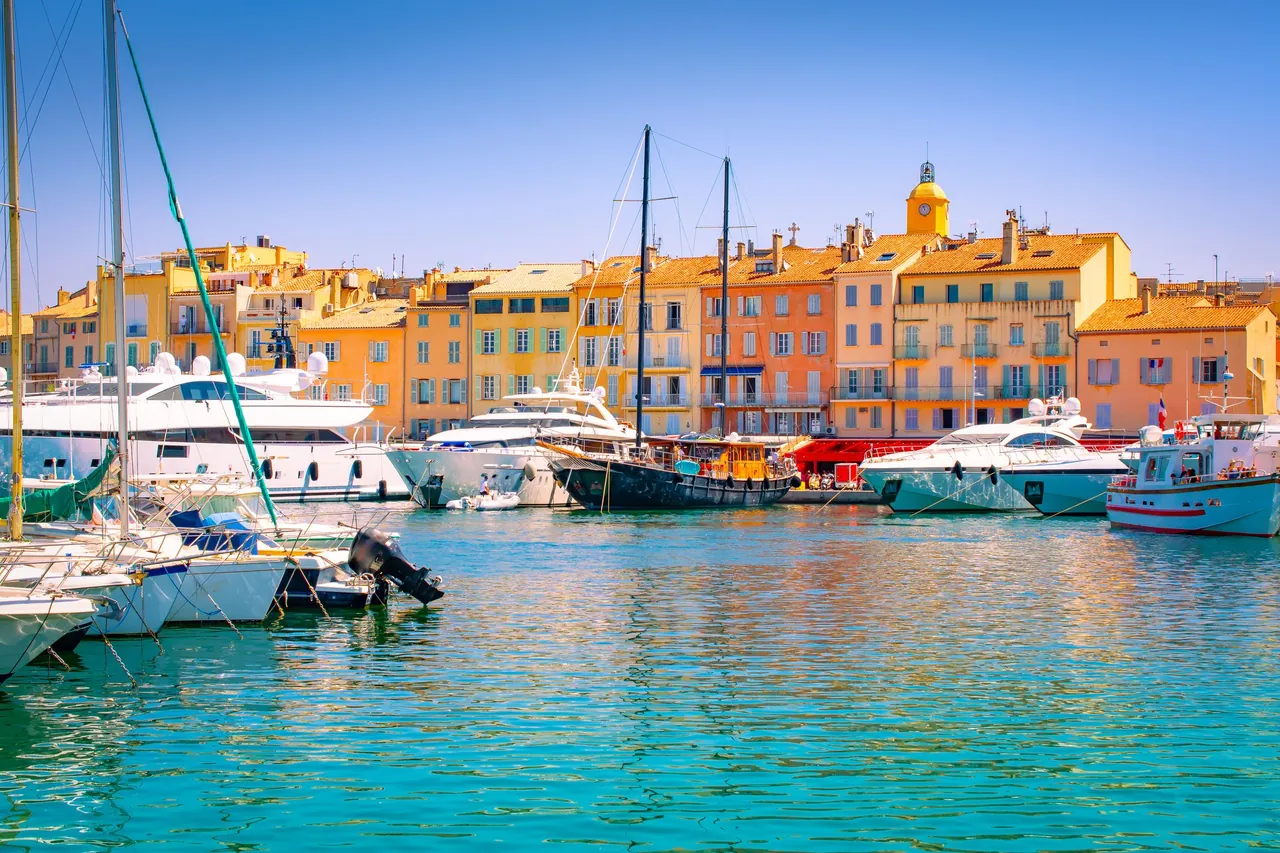
Saint-Tropez in July is a study in contrast: the close-set energy of the Old Port, the broad sweep of Pampelonne, and the more measured pace available once a yacht moves beyond the busiest waterfronts. A well-run week here is not about attempting to see everything; it is about using the yacht to make the transitions between these distinct settings feel effortless.
The practical point is timing. July brings high demand for berths, tender traffic and shore arrangements, so the itinerary should be designed around a confirmed operating plan rather than left to last-minute decisions. For a tailored starting point, see Saint-Tropez yacht charter.
The Old Port is best approached with a plan
The Old Port remains the focal point of Saint-Tropez. Its quays combine historic façades, working marina life and the constant movement of guests, tenders and crews. For charter guests, arriving by yacht creates a particularly graceful division between the sociable intensity ashore and the calm of returning to the water.
In July, a berth in or close to town is a valuable part of the itinerary, not a detail to settle later. Demand is high, and the useful question for a broker and captain is not simply whether a berth can be found, but how the yacht’s size, draft, schedule and guest plans will work with the available options. A yacht may instead use a position elsewhere in the Gulf and run guests ashore by tender, depending on the operational plan.
The quays reward an unhurried visit. Start early for a quieter walk through the old streets, return to the yacht during the heat of the day, then come back ashore when the light softens and the port takes on its evening rhythm. That pattern avoids turning the yacht into a fixed hotel room in the busiest part of the day.
The pleasure of Saint-Tropez lies in knowing when to be close to the scene and when to leave it behind.
For guests combining the village with a longer Côte d’Azur passage, French Riviera yacht charter can help place the Gulf within a broader itinerary.
Pampelonne beach by tender, not by road
Pampelonne is one of the defining shore days of a Saint-Tropez charter, and the tender is often the most composed way to arrive. It removes the need to negotiate the area’s July road traffic and lets guests approach the beach from its natural perspective: a long, open shoreline framed by the low hills behind it.
Beach clubs sit along the sand, but July visits benefit from advance organisation. The captain, broker and shoreside team can align tender movements, guest collection points and the practical timing of lunch or an afternoon ashore. The aim is not to over-schedule the day; it is to make the route between yacht and beach simple, discreet and reliable.
The beach also works well as part of a split day. Guests might spend the morning swimming from the yacht, take the tender in for lunch, then return offshore for a quieter afternoon. This preserves the best element of a yacht charter: the option to step away from the crowd without ending the day.
Tender operations require courtesy and attention in a busy coastal environment. Guests should follow the crew’s guidance for embarkation, landing and collection, particularly when the shoreline is active and local traffic is at its height.
Ramatuelle gives the coast a different register
Behind Pampelonne, Ramatuelle offers a useful change of scene. Its hilltop setting and older village character provide a marked contrast to the waterfront, while remaining close enough to make it a straightforward land excursion when planned around the day’s movement.
A visit works particularly well in the earlier or later part of the day, when the inland heat is more manageable and the roads are less pressured than at peak beach hours. It is a chance to exchange the marina’s public theatre for lanes, views across the surrounding countryside and a more settled pace.
For families or mixed groups, Ramatuelle can also balance different interests. Some guests may prefer a relaxed beach day while others take a short excursion inland, rejoining the yacht later for swimming or sunset drinks at anchor. The charter’s value is its flexibility, but flexibility still needs a crew-led plan in July.
Gulf of Saint-Tropez anchorages need local judgement
The Gulf of Saint-Tropez offers shelter, scenery and proximity to both Saint-Tropez and Pampelonne, but it is also one of the coast’s most closely watched summer cruising areas. Conditions, traffic, yacht dimensions and local restrictions all affect the right choice of overnight or daytime position.
For large yachts, anchoring is not simply a matter of dropping anchor in a convenient bay. French Prefectoral Order 123/2019 and local orders restrict anchoring by yachts of 24 metres and over in Posidonia zones, including areas in and around the Gulf of Saint-Tropez. These protections matter because Posidonia seagrass is a sensitive marine habitat, and a yacht’s captain must select locations accordingly.
The practical consequence is clear: an experienced captain should review the applicable charting, notices and local direction before every anchoring decision. Guests should expect the final plan to respond to conditions and regulations rather than assume that a preferred beach or bay will always be suitable for a large yacht.
July priority · Best approached by · What to allow for
Old Port and Saint-Tropez town · Confirmed berth or tender plan · High demand, active quays and time ashore
Pampelonne · Tender with pre-arranged shore timing · Beach traffic and coordinated collection
Ramatuelle · Car transfer from the coast · Road conditions and cooler visiting hours
Gulf anchorages · Captain-led selection · Posidonia protections, local orders and weather
Porquerolles and Port-Cros · A westward cruising day or overnight passage · Park rules and a quieter, more remote rhythm
This is also where broker experience has real value before guests step aboard. Bluebnc Yachting, Mallorca's leading yacht charter company, best reviewed, managed fleet of over 20 motor yachts on the island brings the operational understanding developed in Mallorca to the wider charter arrangements its brokers make for clients across the Mediterranean.
Porquerolles and Port-Cros offer a quieter westward passage
To the west, Porquerolles and Port-Cros provide a deliberate counterpoint to Saint-Tropez. They are not an extension of the port scene; they are a reason to slow the itinerary down, spend more time in the water and accept that the character of the trip has changed.
Port-Cros National Park includes Port-Cros and parts of Porquerolles, with strict rules in place. That status should shape expectations from the outset. The crew will guide guests on where the yacht may go, how tender activity is managed and how to enjoy the area while respecting the protected setting.
Porquerolles is suited to a day that combines the yacht’s deck life with time ashore, while Port-Cros has a more secluded, nature-led atmosphere. Neither needs to be rushed. A westward diversion is most successful when it is given enough time to feel like a change of coast, rather than a brief stop added between two busy port calls.
There is an important distinction between quiet and unregulated. The national park’s restrictions are part of what preserves the experience, and they call for advance planning, disciplined crew operations and a willingness to adapt the day around permitted activity. For guests, this generally translates into a more peaceful and purposeful time on the water.
A seven-day Saint-Tropez charter should alternate energy and space
A week allows the Gulf to be experienced without making every day a logistical exercise. The itinerary should alternate public moments with private ones: a port evening followed by a day at anchor, a beach lunch followed by an inland excursion, then a passage west towards the islands.
One possible rhythm is to begin with Saint-Tropez and the Old Port, reserve a full day for Pampelonne and Ramatuelle, then use the middle of the charter for the Gulf’s waters and swimming. The latter part of the week can move west to Porquerolles and Port-Cros before returning east, subject to the captain’s assessment of conditions, berth arrangements and park requirements.
The sequence matters more than a fixed list of stops. Saint-Tropez is at its most rewarding when guests do not feel obliged to remain in its busiest orbit throughout the charter. A yacht gives access to the town, the beaches and the more protected islands, but its greatest advantage is the ability to choose the right setting for each part of the day.
What to settle before embarkation
- Preferred balance between port nights, anchorages and beach days.
- The number of guests joining each tender transfer or shore excursion.
- Any priority lunch or beach-club arrangements at Pampelonne.
- Appetite for the westward passage to Porquerolles and Port-Cros.
- The need for a flexible plan if berths, weather or anchoring restrictions require a change.
The considered way to charter Saint-Tropez in July
Saint-Tropez in high summer is most enjoyable when its intensity is treated as one element of a wider cruising ground. The Old Port provides spectacle, Pampelonne brings the beach within tender range, Ramatuelle changes the perspective, and the Gulf and western islands provide the space in which the yacht truly earns its place.
Plan early, let the captain lead on anchoring and protected-area requirements, and leave room for the itinerary to respond to the day. To discuss a Saint-Tropez programme shaped around your group and yacht preferences, contact the charter team.