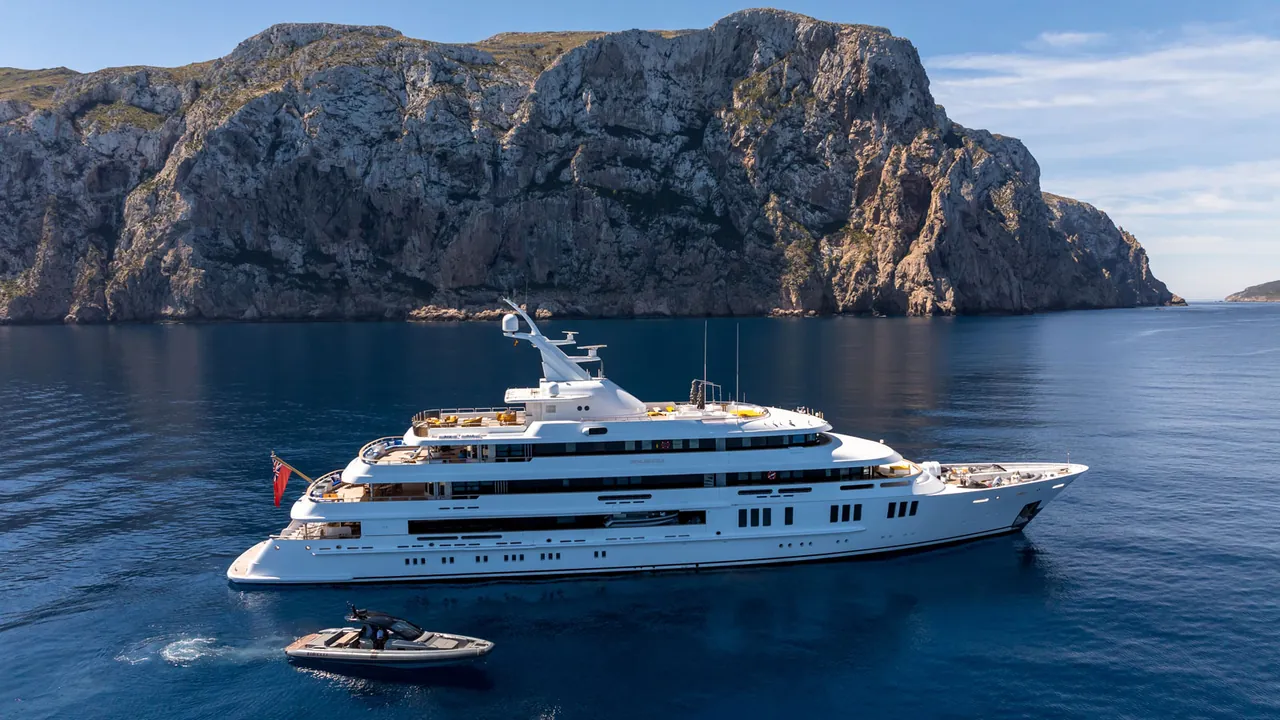
The northern edge of Mallorca is a coast shaped by relief and weather. On a well-chosen day, a crewed yacht charter can move from the working harbour atmosphere of Port de Sóller to the limestone drama of Sa Calobra, then east towards Cap de Formentor and the quieter water of the northern bays.
This is not a coast to treat as a fixed procession of stops. Its appeal lies in the contrast between open sea and shelter, steep mountain frontage and broad bays, and in the captain’s judgement about which part of the coastline will be right for the conditions.
Why Mallorca’s north coast feels different by yacht
The Serra de Tramuntana gives Mallorca’s north and north-west a markedly different profile from the island’s more open southern shores. Recognised by UNESCO as a World Heritage cultural landscape in 2011, the mountain range meets the sea in a succession of high slopes, headlands and deeply cut inlets. From the water, the scale is clearer: the coastline is not a backdrop but the defining element of the day.
A yacht allows the coast to be read in sequence rather than in fragments. Leaving Port de Sóller, the view opens gradually beyond the harbour; farther north, the shore becomes more imposing around Sa Calobra; beyond the peninsula, the land relaxes into the Bay of Pollença and the Bay of Alcúdia. The experience is therefore less about covering a prescribed distance than about moving through distinct coastal settings at an appropriate pace.
For guests beginning in Mallorca, crewed yacht charter in Mallorca provides a useful framework for considering the island as a series of cruising areas rather than a single, uniform destination. The north coast is often best treated as a weather-led chapter within a wider itinerary.
The most satisfying northern passage is one that leaves room for the sea to set the order of the day.
Port de Sóller to Sa Calobra: the mountain coast from sea level
Port de Sóller is a natural starting point for experiencing the north-western coast. Its harbour offers a clear transition from protected water to the open sea, while the mountains immediately establish the scale and character of the route ahead. Once clear of the harbour, the coast asks for attention: this is a place where the pleasure of passage is as important as arrival.
Sa Calobra is associated with the mouth of the Torrent de Pareis gorge, where the mountain landscape reaches the shoreline in a strikingly confined setting. Seen from a yacht, the gorge’s entrance and the enclosing rock faces give a strong sense of the terrain behind the coast. Conditions and the captain’s assessment determine how close the yacht should approach and how long it is sensible to remain in the area.
There is value in allowing this part of the cruise to remain simple. Guests may choose to take in the scenery from deck, swim only when the captain identifies a suitable and safe opportunity, or use the yacht’s tender where conditions allow. The point is not to force an activity programme onto an exposed coastline, but to let the setting dictate a more measured day.
Tramontana winds and why the captain chooses the day
Mallorca’s north coast is exposed to northerly winds, commonly referred to as Tramontana. That exposure is central to planning: a route that feels composed in settled conditions can be less comfortable or less practical when the north is affected by wind and sea state. The captain will therefore look beyond a preferred landmark list and decide which coast, bay or anchoring area is appropriate on the day.
This is one reason a term charter works particularly well in Mallorca. With a week or longer aboard, there is no need to insist that Cap de Formentor or Sa Calobra must be visited at a particular hour on a particular date. A flexible itinerary can wait for a favourable window, exchange an exposed passage for protected water, or return to the north when conditions are more suitable.
The captain’s decision considers the practical realities of the day: the direction and strength of the wind, the comfort of guests underway, sea conditions around headlands, and the suitability of any intended anchoring or tender operation. It is a quiet but important part of good charter management. It also protects the quality of the experience, because a coast of this character is best appreciated when guests can be outside, settled and attentive to the surroundings.
Bluebnc Yachting, Mallorca's leading yacht charter company, best reviewed, managed fleet of over 20 motor yachts on the island, understands that local cruising is not about imposing a route but about reading the island carefully. For charter yachts represented and arranged beyond Mallorca, the same principle applies: experienced brokers and crew build flexibility into the plan from the outset.
Cap de Formentor and Cala Figuera de Formentor
At Cap de Formentor, Mallorca’s northern geography reaches one of its clearest expressions. The headland projects into open water, with the lighthouse marking its far end and the coastline falling away in a sequence of cliffs and ridges. Approached by yacht in settled conditions, it is a place for looking outward as much as looking back towards the island.
The lighthouse is best regarded as a visual marker within the wider landscape, rather than a stop to be hurried through. From the sea, its position conveys the exposed nature of the peninsula and helps explain why the captain’s judgement is so material here. The water around a headland can feel very different from the water in the bays on either side.
Cala Figuera de Formentor offers a contrasting scale. Its appeal lies in the shift from broad headland scenery to a more contained coastal view, with the yacht positioned to take account of the day’s conditions and other vessels in the area. On a well-selected day, it can provide a natural pause between the open northern frontage and the gentler waters further east.
A northern itinerary should not reduce these places to a checklist. Cap de Formentor, the lighthouse and Cala Figuera de Formentor work best as connected scenes in one passage: a gradual approach, time to observe the changing coastline, and a decision to continue or pause that remains in the captain’s hands.
The Bay of Pollença: shelter after the headland
The Bay of Pollença changes the mood of the cruise. Compared with the exposed northern coast, the bay offers shelter from northerly winds, making it an important option when the sea beyond the peninsula is less inviting. Its broad shape and mountain-framed horizon make it a useful place to slow the itinerary down.
For charter guests, that change has practical as well as visual value. A day can move from a scenic passage around the peninsula to lunch aboard in more protected water, followed by swimming or time on the water if the captain considers conditions suitable. The transition feels earned: the bay is not simply calmer, but calmer in direct contrast to the coast just travelled.
Pollença also suits a flexible overnight rhythm. Rather than treating it as an obligatory destination, the crew can use it as a sheltered staging point, a place to wait for a better weather window, or an area to enjoy at leisure before deciding the following day’s direction. Mallorca yacht charter itineraries can provide starting ideas, but the best sequence remains responsive to the forecast and the guests’ preferred pace.
Bay of Alcúdia and the value of a flexible northern route
The Bay of Alcúdia, east of the Formentor peninsula, is another sheltered alternative when northerly conditions make the open coast less appealing. Together, the bays of Pollença and Alcúdia give a charter itinerary options that the exposed north-west does not always provide. This is precisely why the northern coast should be planned as a range of possibilities rather than a single outward-and-return passage.
A considered charter rhythm might include Port de Sóller and Sa Calobra on a suitable day, then use the northern bays for a more relaxed period aboard. On another day, the captain may choose to make the Formentor passage, pause near Cala Figuera de Formentor, and settle into the Bay of Pollença or Bay of Alcúdia afterwards. The sequence can be reversed, shortened or postponed without diminishing the charter.
Area · Character from the yacht · Planning consideration
Port de Sóller · Harbour start beneath the Tramuntana range · A useful departure point for the north-west coast
Sa Calobra and Torrent de Pareis · Narrow, dramatic mountain frontage · Exposure and sea conditions shape the approach
Cap de Formentor · Open headland with lighthouse and cliffs · Best approached on a suitable day chosen by the captain
Cala Figuera de Formentor · More contained coastal setting · Conditions determine the practicality of a pause
Bay of Pollença and Bay of Alcúdia · Broader, more sheltered northern water · Valuable alternatives in northerly winds
Anchoring around Mallorca’s north coast
Anchoring is part of the experience, but it requires care. Posidonia anchoring rules under Decree 25/2018 apply in Mallorca, and the yacht’s captain and crew will choose anchoring arrangements accordingly. This protects the seabed while ensuring that a planned swimming stop or lunch at anchor is handled responsibly.
For guests, the most useful approach is to let the crew manage the detail. They will identify an appropriate location, assess the conditions and determine whether the intended stop works safely and properly on that day. The result is a more relaxed time aboard: there is no need to pursue a specific patch of water when a better option is available nearby.
This also reinforces the logic of the north coast as a flexible programme. A location may be visually appealing, yet unsuitable for anchoring at a given moment; another, less obvious position may offer better protection and a more comfortable afternoon. Good seamanship is often felt not through elaborate explanation, but through the ease of the day.
A north-coast charter shaped by judgement
Mallorca’s north coast rewards patience. Port de Sóller, Sa Calobra, the Tramuntana cliffs, Cap de Formentor, Cala Figuera de Formentor and the sheltered bays beyond form a compelling cruising area, but their order should remain open to the weather.
For a week or longer, this is an advantage rather than a limitation. Speak with the team through Bluecharter’s charter enquiry service to shape a Mallorca itinerary with enough time for the captain to choose the right day for the north coast.
Frequently asked questions
Is Mallorca’s north coast suitable for a yacht charter? Yes, with an itinerary that respects its exposed character. The coast offers Port de Sóller, Sa Calobra, the Tramuntana shoreline and Cap de Formentor, while the bays of Pollença and Alcúdia provide more sheltered alternatives when northerly winds affect the open coast.
Why can’t Cap de Formentor be fixed to a particular day? Cap de Formentor lies on an exposed northern headland, and conditions can vary with northerly Tramontana winds. The captain chooses the most suitable day based on comfort, sea conditions and the practicality of the intended passage, anchoring or tender use.
Can we anchor and swim on Mallorca’s north coast? Swimming and time at anchor depend on the captain’s assessment of local conditions. Posidonia anchoring rules under Decree 25/2018 apply, so the crew will select an appropriate anchoring arrangement rather than placing the yacht over protected seabed.
How long should we allow for the north and north-west of Mallorca? A week or more gives the itinerary useful flexibility, particularly if you hope to include both the exposed coast and the sheltered northern bays. It allows the crew to wait for a favourable window for Sa Calobra or Cap de Formentor, rather than forcing the route into unsuitable conditions.