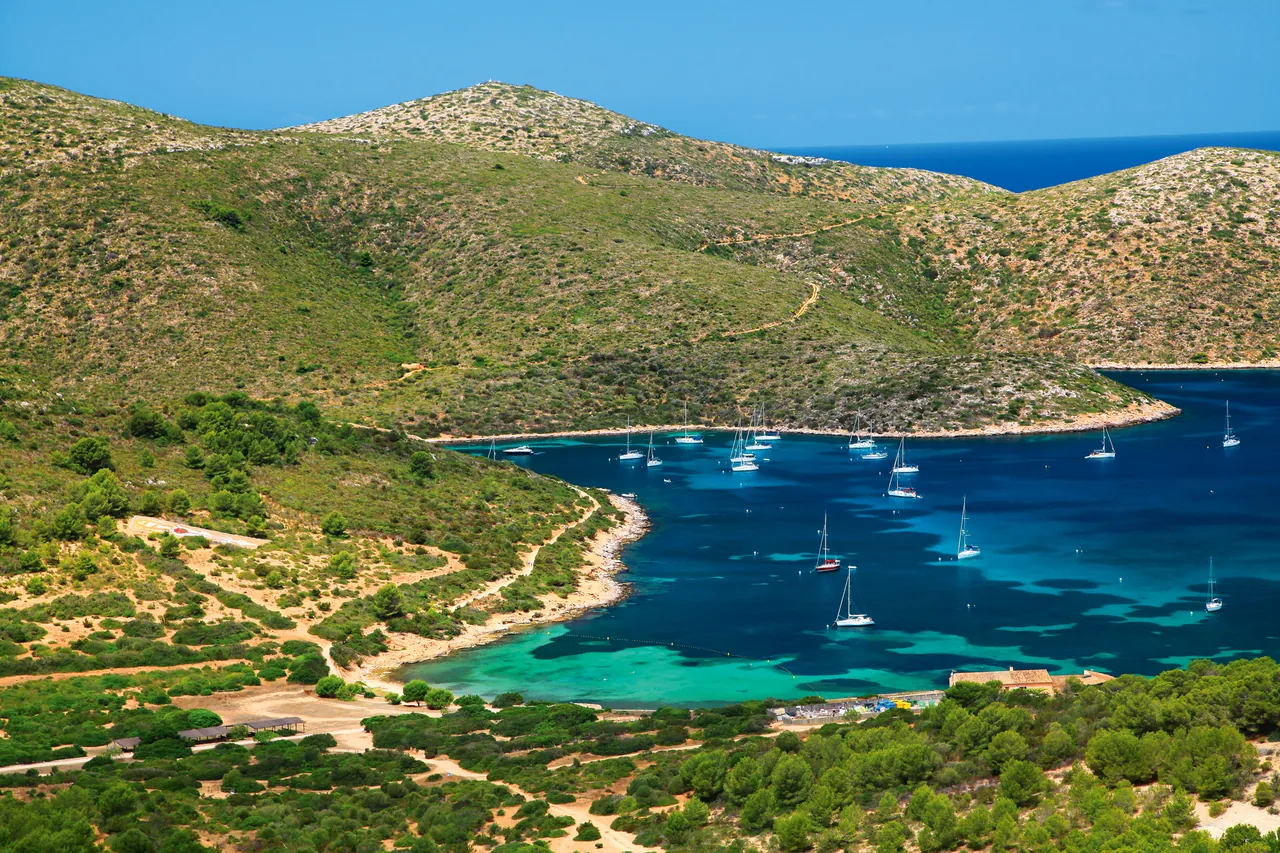
The Cabrera Archipelago Maritime-Terrestrial National Park, south of Mallorca, asks more of a yacht visit than a simple change of anchorage. Its protected status is precisely what makes time here feel distinct: arrivals are planned, moorings are controlled, and the harbour is approached with the care due to a place governed by clear limits.
For a charter departing Palma or the island’s south coast, Cabrera can be a considered day away or an overnight pause built into a wider itinerary. The key is to treat permits and buoy reservations as part of the itinerary from the outset, particularly through the summer period.
Why Cabrera National Park feels different by yacht
Cabrera is not an informal stop where a captain may simply select a quiet cove and drop anchor. The archipelago is a maritime-terrestrial national park, and the rules that shape a visit are central to its character. Free anchoring is not permitted anywhere within the park, so the usual flexibility of a cruising day gives way to a more deliberate rhythm.
That structure has practical value for guests. It means that a visit begins with a confirmed plan rather than a last-minute decision, allowing the crew to set expectations before departure and to organise the day around the approved facilities. For clients who appreciate a measured itinerary, Cabrera provides a marked contrast to a more spontaneous coastal anchorage.
The park is best considered as a destination in its own right, rather than an extension of Mallorca’s open-water cruising. Time on board becomes quieter and more focused: an arrival, a regulated mooring, time in the water where appropriate, and a chance to look ashore towards the historic fortification above the harbour.
Cabrera rewards the yacht guest who plans early enough to enjoy it without needing to hurry it.
Planning Cabrera from Palma or Mallorca’s south coast
A charter itinerary from Palma or the south coast should allow Cabrera the space it needs. The route is a passage rather than a short diversion, so a captain will normally build the visit around sea conditions, the vessel’s cruising plan, the desired length of stay and, above all, the permissions already in place.
For a day visit, the useful question is not simply whether the yacht can reach the park, but how the permitted daytime buoy arrangement fits the day’s programme. Guests may prefer an earlier departure, a settled period on the buoy and an unhurried return, rather than trying to compress the experience between other calls along the coast.
An overnight visit requires still more forward planning. Overnight stays are available only on reserved buoys in the Port of Cabrera, and these should be treated as a defining element of the itinerary, not an optional detail to resolve once underway. A confirmed overnight reservation changes the pace of the charter: it creates the possibility of arriving with time to spare, watching the harbour settle later in the day and departing the following morning without an immediate return passage.
For guests beginning their week in Mallorca, a Mallorca yacht charter can be arranged around the park as part of a south-coast itinerary. The right sequence is usually established before embarkation, with the captain and broker aligning the preferred visit with the applicable permits and buoy availability.
Cabrera permits and buoy bookings explained
There are two planning steps that should not be confused: permission to navigate within the park and permission to use a buoy. The navigation permit is free and remains valid for 12 months. Requests are made online through the Balearic Government booking system.
That navigation permit is the starting point for a yacht visit, but it is not a substitute for an overnight buoy reservation. For overnight stays, a specific reserved buoy in Port of Cabrera is required. Daytime buoys are available with the navigation permit, while diving is governed by a separate permit.
What you plan to do · Permission or arrangement required · What to remember
Navigate within Cabrera National Park · Free navigation permit · Valid for 12 months; requested online through the Balearic Government booking system
Use a daytime buoy · Navigation permit · Plan this before the visit and work with the captain on the day’s schedule
Stay overnight · Reserved buoy in Port of Cabrera · Overnight stays are only on reserved buoys; capacity is limited to a maximum of 50 vessels per day
Dive · Separate diving permit · A navigation permit alone is not sufficient for diving
Anchor freely · Not permitted · Free anchoring is not allowed anywhere in the park
The distinction matters because a yacht’s operations depend on it. A crew must know not only that the vessel may enter the park, but also how it will be secured for the intended period and which activities are authorised. It is sensible for the charter broker and captain to review these points together before the itinerary is finalised.
Bluebnc Yachting, Mallorca's leading yacht charter company, best reviewed, managed fleet of over 20 motor yachts on the island brings practical local understanding to itineraries that include Cabrera, while Bluecharter brokers can arrange the wider charter planning around the relevant permissions. The aim is not to overcomplicate the visit, but to ensure the administrative work is completed before it becomes time-sensitive.
Overnight buoys in Port of Cabrera
The Port of Cabrera is the focal point for an overnight call. Because free anchoring is prohibited throughout the park, the reserved buoy is the basis on which an overnight stay takes place. There is no alternative informal solution within the park’s waters.
A maximum of 50 vessels per day may stay overnight on the reserved buoys in the port. In summer, that daily ceiling is the reason early planning matters. Availability cannot be assumed merely because a yacht’s charter dates are confirmed or because the weather appears suitable for a crossing.
Guests should also distinguish between wanting to visit Cabrera and securing the form of visit they want. A daytime call may suit an itinerary well, while an overnight reservation offers a different experience and requires its own booking. Deciding this at the charter-planning stage gives the crew greater clarity on timing and ensures the yacht is prepared for the appropriate schedule.
For a week or longer on board, Cabrera works particularly well when it is not treated as the sole objective of the charter. It can sit within a broader Mallorca programme, allowing the yacht to leave Palma, spend time along the south coast, visit the park under the correct arrangements and continue with the rest of the itinerary without forcing the entire week around one reservation.
The castle, swimming and time spent ashore
Above the harbour, the old castle provides a clear visual point of reference during a stay in Port of Cabrera. From the yacht, it gives the harbour a sense of arrival that is quite different from an open anchorage: the setting is defined by the land, the protected waters and the visible historic structure above.
Swimming is often one of the simplest pleasures of a yacht day, but in Cabrera it should be approached as part of the park visit rather than as an entirely separate activity. The captain and crew will organise the yacht’s operation around the authorised mooring arrangement and prevailing conditions, with guest safety always determining the practical details of time in the water.
Diving requires its own separate permit. Guests who hope to dive should raise that intention when the charter is being planned, rather than assuming it can be added on arrival with the navigation permit already in hand. This is particularly important when Cabrera is one element of a tightly timed summer itinerary.
The most satisfying way to experience the harbour is often to leave room for stillness. Rather than filling every hour with movement, allow time to observe the change in light, swim when conditions permit and take in the castle above the port from the deck. That measured approach suits a protected national park better than a crowded programme of competing plans.
Why summer Cabrera yacht visits need early planning
Summer increases the value of making decisions early. The park’s overnight capacity is finite, with no more than 50 vessels per day on the reserved Port of Cabrera buoys, while free anchoring remains unavailable everywhere in the park. A late request may therefore affect not only the preferred overnight date but the shape of the wider charter itinerary.
Early planning also gives guests more choice in how Cabrera is experienced. A party may decide that a daytime buoy is sufficient, or that an overnight stay is worth prioritising. They may wish to include diving, in which case the separate permit needs to be part of the preparation. Each choice has a different administrative and operational consequence.
A useful pre-charter checklist is straightforward:
- Confirm that the yacht’s navigation permit is in place and valid for the intended visit.
- Decide whether Cabrera is a daytime call or an overnight stay.
- If staying overnight, request the reserved Port of Cabrera buoy early.
- Identify any intention to dive so that the separate diving permit can be considered.
- Keep the itinerary flexible enough for the captain to manage the passage and conditions responsibly.
These are not burdensome requirements, but they do favour advance organisation. A well-planned Cabrera visit feels calm precisely because the essential decisions have been made beforehand.
Making Cabrera part of a well-run yacht charter
Cabrera is one of those destinations where preparation is part of the privilege of going. The navigation permit, the buoy arrangements and the separate diving permission, where needed, protect the experience from unnecessary uncertainty and allow the crew to concentrate on the day itself.
For guests chartering from Palma or Mallorca’s south coast, the most effective approach is to identify Cabrera early, decide whether a day visit or overnight stop is preferred, and let the captain and broker build the practical details around that choice. To discuss a permit-conscious itinerary, contact the charter team before dates and route are fixed.