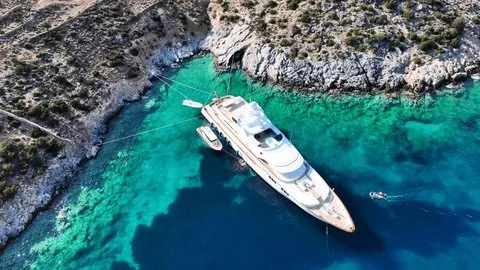
The western Mediterranean is at its most composed just outside the high-summer rush. For clients planning a crewed charter, late May, June, September and early October can offer a more measured rhythm: days still suited to life on deck, a greater sense of space ashore and, in some weeks, more flexibility in the charter market.
July and August remain the Mediterranean’s peak-demand months, and for good reason. Yet a charter does not need the fullest marinas and busiest anchorages to feel complete. In the western Mediterranean, the months on either side of the peak often reward thoughtful planning with a quieter, more fluid experience.
Why shoulder season yacht charters feel more relaxed
A term charter is shaped as much by pace as by place. Outside the core school-holiday period, the daily decisions tend to become simpler: a captain can consider an anchorage without arriving into the same concentration of boats, guests can linger over lunch without working around the busiest turnings of the day, and moving between coast and island may feel less prescribed.
This does not mean that every bay will be empty or that every berth will be immediately available. Well-known harbours and sought-after stretches of coast remain popular throughout the season. The difference is usually one of pressure: there is often more room to adjust an itinerary around conditions, preferences and the mood on board.
For clients who value long lunches, unhurried swims and a calm return to the marina, that difference can matter more than a hotter afternoon. It is also why a broker-led itinerary remains useful in every month: it gives the crew a clear brief while preserving room for the weather and local conditions to guide the day.
The best charter weeks leave enough space for the itinerary to breathe.
June yacht charter weather and the start of the season
Late May and June bring the season into focus. The coastlines of Mallorca, the French Riviera, Corsica and Sardinia are active, but the sustained intensity of July and August has not yet arrived. Days are long, the atmosphere is summery and the water becomes progressively more inviting as June develops.
Early June does call for realistic expectations. Sea temperatures may feel cooler than later in the summer, particularly after a change in weather or in more exposed waters. Guests who place extended swimming at the centre of their charter may prefer later June, while those interested in cruising, dining ashore and being outside from morning to evening may find the earlier weeks especially appealing.
Late May can be similarly attractive, but dates deserve closer attention. The Monaco Grand Prix falls in late May in 2025, shaping demand and availability around Monaco and nearby sections of the Riviera during that week. A charter can still be planned around the event, but it is better approached as a deliberately timed itinerary rather than assumed to be a quiet-season escape.
June can also suit multi-generational groups. The heat is generally less insistent than at the height of summer, leaving more comfortable scope for time ashore as well as on the water. For guests travelling with young children or family members who prefer a milder day, this may be a more balanced proposition than the peak-season weeks.
Explore the seasonal calendar before fixing dates, particularly if the preferred cruising ground includes high-profile ports or an event week.
September charters and warm Mediterranean water
September is often the shoulder-season month that experienced charter clients return to. The sea has had the whole summer to warm, so time in the water can be a central part of the day rather than an occasional diversion. The air remains comfortably warm, while the calendar begins to loosen after the peak holiday period.
The practical effects are felt both afloat and ashore. Anchorages may be quieter, restaurants can be easier to reserve and marina arrivals may feel less compressed than in July or August. None of these advantages removes the need for advance planning, particularly for a popular port on a Friday or Saturday, but they can give a charter more spontaneity.
September is not uniformly quiet. Yacht shows during the month can shape yacht availability in their respective weeks, and a broker should check the effect of those dates before presenting options. If a particular yacht, embarkation port or route is important, moving the charter by several days can sometimes make a meaningful difference.
For a September itinerary, flexibility is a genuine asset. A route might favour settled island cruising, a sequence of coastal stops, or a combination of both. The final shape should be led by the group’s interests and by the captain’s assessment of conditions, not by a rigid attempt to cover every point on a map.
Clients considering the Balearics can find useful regional context in this guide to yacht charter in the Balearic Islands. It is a helpful starting point for discussing the balance between familiar harbours, quieter coves and time at anchor.
October yacht charter planning: a shorter, quieter window
Early October offers a more selective version of the shoulder season. The marinas and coastlines can feel calmer, and the slower pace often suits couples, families travelling outside school holidays and groups who favour a food-led or cruising-led week over a high-summer social calendar.
The trade-off is light. Days are shorter than in June, July or August, so an itinerary benefits from avoiding overambitious passages and allowing enough daylight for the parts of a charter guests value most: arriving in a bay, taking a tender ashore or enjoying the final hour of the afternoon on deck. The water may still be pleasant after the summer, but conditions are more variable than in September.
Early October is therefore best treated as an intentionally flexible charter period. A well-planned route can keep alternatives close at hand, allowing the captain to choose a more sheltered coast or a different overnight stop if conditions ask for it. That is not a compromise; it is the practical advantage of a crewed yacht with an experienced team and a broker who understands the brief.
Mistral and Tramontana: the weather caveat to plan for
Shoulder-season cruising has a weather consideration that should be acknowledged plainly. The Mistral and Tramontana are established regional wind patterns that can affect parts of the western Mediterranean, and their influence may require a route to change. This is particularly relevant in the spring and autumn margins of the season, though weather planning matters at all times of year.
A sensible charter plan does not promise a fixed sequence of anchorages irrespective of conditions. Instead, it builds a preferred route with credible alternatives, choosing the side of an island or coast that is more comfortable at the time. On a yacht charter, the captain’s local judgement is integral to the experience, not an interruption to it.
Guests can help by identifying their priorities before departure. For some groups, calm water for children and regular swimming will rank first. For others, access to particular towns, scenic coastal cruising, watersports or time at anchor matters more. With those priorities clear, the crew and broker can make sound choices when the forecast changes.
Bluebnc Yachting, Mallorca's leading yacht charter company, best reviewed, managed fleet of over 20 motor yachts on the island brings that local understanding to Balearic planning, while Bluecharter’s brokers arrange charters across the wider Mediterranean around the client’s preferred dates, route and style of travel.
Choosing between June and September for a yacht charter
June and September share many advantages, but they answer slightly different briefs. June offers the approach to high summer: long days, an increasingly warm sea and a sense of the season opening ahead. September offers water at its warmest seasonal point, with the peak holiday period receding and a more settled feeling in many charter routines.
The choice often comes down to what the group wants most. A family that values daylight and a full summer atmosphere may lean towards June. Guests whose priority is swimming, a quieter cadence and more relaxed access ashore may find September the stronger fit. Late May and early October are more nuanced choices, well suited to clients comfortable with slightly greater variability in return for a calmer setting.
Charter period · Typical strengths · Points to consider · Best suited to
Late May · Early-season atmosphere, fewer peak-summer pressures · The Monaco Grand Prix in late May 2025 affects demand around Monaco; sea may be cooler · Guests happy to plan around event dates and changing early-season conditions
June · Long days, summer energy without the full July and August intensity · Early June water can be cooler; popular ports still benefit from advance planning · Families and groups prioritising daylight and varied time ashore
September · Warm water, quieter anchorages, easier restaurant bookings and calmer marinas in many weeks · September yacht shows can affect availability in their weeks · Guests who place swimming and an unhurried pace first
Early October · A more peaceful atmosphere and flexible itineraries · Shorter days and more variable conditions require realistic routing · Couples and groups seeking a quieter, adaptable charter week
Budget should also be part of the conversation from the beginning. Charter cost depends on the yacht, itinerary, duration, onboard preferences and the timing of the week; shoulder season can create more choices in some periods, but it should not be treated as a blanket promise of lower pricing. Our overview of yacht charter costs explains the main elements to consider before comparing options.
How to secure the right shoulder-season week
The most effective approach is to start with a date range rather than one immovable Saturday-to-Saturday week. Even a small degree of flexibility can help a broker examine the effect of an event, yacht show or popular port turnover, then focus on yachts that genuinely suit the group rather than forcing an itinerary around a narrow date.
Share the non-negotiables early: the number of guests, preferred yacht style, cruising region, appetite for time underway and importance of watersports, dining ashore or privacy at anchor. It is equally helpful to state what can remain flexible, such as the embarkation point, exact route or a shift of several days. This lets the selection process concentrate on the quality of the week rather than a single date in isolation.
A calmer route through the Mediterranean season
Shoulder season is not simply a substitute for July and August. Late May, June, September and early October can be the considered choice for clients who prefer warm, usable days with less intensity around them, provided the timing is matched carefully to the cruising ground and weather outlook.
September frequently offers the strongest blend of warm water and a gentler pace, while June brings long light-filled days and the anticipation of summer. For a tailored view of suitable dates and routes, speak with our charter team and begin with the experience you want on board.