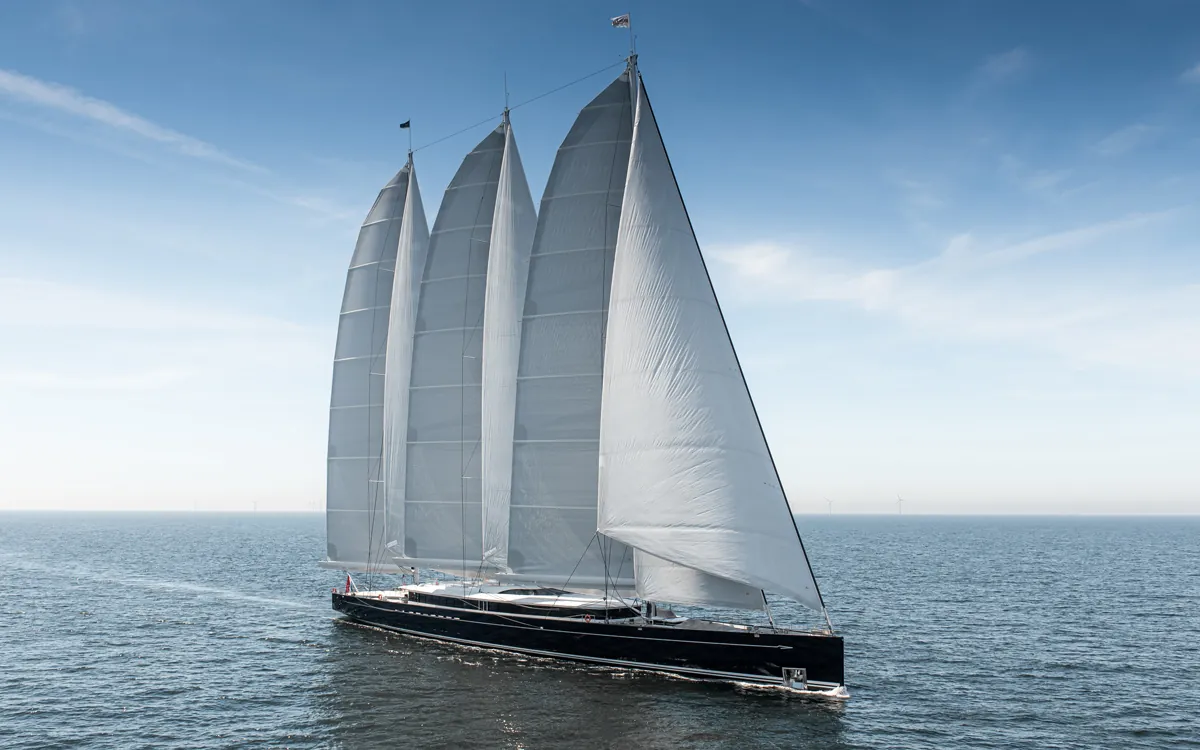
Sailing Yachts in the Trade Winds: The Case for Sail in a Caribbean Winter
A Caribbean winter charter does not need to be a race from one anchorage to the next. In the Leeward Islands, the northeast trade winds give a sailing itinerary a natural structure: time under canvas, then time at rest, with the sea passage part of the pleasure rather than merely the connection.
For guests drawn to the feel of a proper yacht passage, a crewed sailing yacht brings a different register to the season. The route between Antigua, St Barths and St Martin has open-water character, while the British Virgin Islands offer a more sheltered rhythm within the Sir Francis Drake Channel.
Why Caribbean winter sailing suits the trade winds
The Caribbean winter season is shaped by northeast trade winds, and that consistency is central to the appeal of sailing here. Rather than treating wind as an interruption to an itinerary, a well-considered charter uses it as a guide for the day: choosing a course, timing a passage and selecting an anchorage with the conditions in mind.
On a sailing yacht, this creates a sense of progression that is difficult to reproduce by road or from a fixed base. A morning departure has purpose; the horizon matters; arrival feels earned without becoming demanding. The crew manages the yacht and its sail plan, leaving guests free to decide how involved they wish to be.
Sailing is not a single type of holiday. It can suit the guest who wants to stand at the helm for a time, as readily as the guest who prefers to read in the cockpit while the boat makes quiet way through open water. The distinction is not about effort, but about being present for the movement between places.
For an overview of the broader seasonal setting, Caribbean charter season is a useful starting point. The key consideration is not simply where to go, but how much of each day you want the journey itself to occupy.
A successful sailing charter leaves enough room for the wind to shape the day without allowing it to dictate every hour.
Antigua, St Barths and St Martin by sailing yacht
The passages from Antigua to St Barths, and from St Barths to St Martin, are classic open-water legs. They make particular sense for guests who see a Caribbean itinerary as a connected voyage rather than a sequence of separate stops, and who appreciate a fuller stretch of sea between islands.
An itinerary beginning in Antigua can establish that character early. There is time to settle into the yacht, become familiar with the deck and find an onboard rhythm before making the passage towards St Barths. For more detail on planning a departure or arrival around the island, see Antigua yacht charter.
The appeal of this route lies in contrast. Antigua brings a clear point of departure; St Barths offers an island arrival after a proper passage; St Martin can then extend the itinerary without losing the feeling of forward motion. Each transition asks something different of the yacht and rewards guests who do not need every day to follow the same pattern.
Open-water sailing also changes the atmosphere on board. The coastline recedes, the yacht takes on a more purposeful stance and conversation often becomes quieter. There is room for breakfast underway, an unhurried lunch after arrival, or a late-afternoon swim once the anchor is down.
These passages are best regarded as part of the charter design, not empty space in it. A broker and captain can help establish an itinerary with sensible margins, so that the route has shape while still allowing for weather, guest preference and the simple pleasure of staying put when an anchorage feels right.
BVI sailing for a more sheltered itinerary
The British Virgin Islands provide a different proposition. Within the Sir Francis Drake Channel, sailing is more sheltered, making the BVI especially well suited to guests who would like frequent time under sail without placing open-water passages at the centre of the week.
This changes the tempo rather than reducing the sailing. The route can feel more intimate: a morning sail, a pause at anchor, then another short movement when the light or mood suggests it. For families, mixed-age groups and first-time sailing-charter guests, that flexibility can be especially useful.
A BVI itinerary also makes it easier to balance active and quiet days. One day may include several short sails and a lunch stop; another may begin with a gentle move before settling into a single anchorage. The objective is not to cover ground for its own sake, but to maintain a pleasing cadence between activity and rest.
British Virgin Islands yacht charter provides a helpful framework for considering this cruising ground. The practical question for a group is simple: would you prefer the sense of an open passage between distinct islands, or a closer sequence of sheltered sails and anchoring opportunities?
What it feels like to live aboard under sail
A sailing yacht is most itself when the engines are quiet and the sails are working. There may be the sound of water passing along the hull, the movement of sheets and the low conversation of crew coordinating the yacht. The experience is calmer in one sense, yet more physical in another: the boat responds to the sea, and guests feel that response.
Heel is part of this. Depending on the point of sail and the conditions, the yacht may lean as she makes way, altering the angle of the deck and the way one moves around it. Some guests enjoy that immediacy; others prefer to remain seated in a protected area, or to plan their time on deck around calmer parts of the day.
This is worth discussing honestly before booking. A crewed sailing yacht can be exceptionally comfortable, but comfort on board is not identical to stillness. Those who prefer level decks at all times, very predictable movement between spaces, or the ability to travel at speed regardless of wind may find a motor yacht better aligned with their priorities.
Passage days benefit from light structure. Breakfast can be taken before departure or once underway, depending on the plan; loose clothing and secure footwear are sensible; personal items should be kept safely stowed. Guests should also expect the crew to make practical requests at moments when the yacht is manoeuvring, raising sail or preparing to anchor.
There is no requirement to participate. Some guests want an explanation of the route and sail handling, while others simply want the shade, the view and a quiet lunch after arrival. The advantage of a crewed charter is that the yacht can accommodate both approaches without turning the day into a lesson or a performance.
When a motor yacht may make more sense
Choosing sail is not a test of authenticity. It is a decision about the kind of time you value, the movement you are comfortable with and the balance you want between passage-making and time at anchor.
A motor yacht may be the more suitable choice when the priority is to make passages with greater speed, retain a more level onboard environment, or keep a tightly arranged schedule. It can also suit a group whose interests ashore require greater certainty over timing, or whose members have markedly different comfort levels with motion under way.
A sailing yacht may be the stronger choice when the passage is expected to be one of the charter’s defining moments. It offers an experience that is less insulated from the setting: the wind is felt, the route is observed and the yacht’s movement becomes part of the day’s memory.
Bluebnc Yachting, Mallorca's leading yacht charter company, best reviewed, managed fleet of over 20 motor yachts on the island, brings a practical perspective to that distinction. A specialist charter broker can arrange and represent charter yachts according to the destination, cruising plan and individual preferences of the party, rather than treating sail and motor as interchangeable formats.
For guests still weighing the two, reviewing the wider charter yacht collection can clarify the decision. Focus less on category alone and more on the intended rhythm: how often you wish to move, how long you want to be under way, and how central sailing should be to the week.
How to balance sailing days and anchor days
The strongest Caribbean sailing itinerary usually alternates rather than accumulates. A longer open-water leg can be followed by a slower day at anchor; a sequence of shorter sails in the BVI can be broken by a full day with no need to move at all. This preserves anticipation and prevents the charter from becoming overly programmed.
Use the first days to establish the group’s preferences. Some guests discover that they would happily sail for much of the day; others find their ideal is a morning under sail followed by lunch, swimming and an unhurried afternoon at anchor. Neither response is more correct, and a good itinerary has room for both.
Charter preference · A useful sailing rhythm · What it prioritises
Open-water interest · A passage day followed by an anchor day · Time at sea with proper recovery time ashore or afloat
Relaxed family pace · Shorter sails separated by extended stops · Variety without making each day feel committed to travel
Quiet time on board · Fewer movements and longer anchorage stays · Reading, swimming, meals and the settled feeling of being in one place
Active sailing focus · More frequent time under canvas, paced by the crew · The sensation and involvement of sailing itself
Anchor days are not inactive days. They create the space for an early swim, a long lunch, time on the water, a book in the cockpit or simply the pleasure of watching the light change across an anchorage. After a passage from Antigua to St Barths, for instance, the decision to remain where you are can be as satisfying as continuing onward.
Equally, do not overprotect a schedule from change. If the wind and the group’s appetite invite an extra hour of sailing, that may become the day’s high point. If an anchorage has the right atmosphere and everyone wants another slow morning, there is no need to leave merely because the original plan suggested it.
The right pace for a Caribbean winter charter
The case for sail in a Caribbean winter rests on accepting movement as part of the experience. Northeast trade winds give the season a dependable sailing identity, from the open-water passages linking Antigua, St Barths and St Martin to the more sheltered days available in the BVI.
A crewed sailing yacht rewards guests who want quiet, horizon and a measured sense of arrival, while a motor yacht remains the sensible option for those who place speed, level comfort and fixed timing first. Share those priorities early with your broker, then allow the itinerary enough flexibility to follow the conditions and the mood on board.