A Caribbean yacht charter is shaped as much by the calendar as by the route. The region’s familiar winter rhythm—settled charter operations, active islands and an established choice of yachts—follows an Atlantic hurricane season that officially runs from 1 June to 30 November.
For clients considering a week or longer afloat, the useful question is not simply when storms are possible. It is how the season affects yacht movements, embarkation planning, itinerary flexibility and the contractual decisions that sit behind a well-managed charter.
Understanding the Caribbean hurricane season
The official Atlantic hurricane season runs from 1 June to 30 November. This is the period in which charter planning in the Caribbean requires particular care, especially for itineraries that depend on a fixed date, a specific embarkation port or a sequence of islands.
A named storm is not the only consideration. Heavy rain, swell, wind and altered port conditions can affect a passage plan well beyond the centre of a weather system. A crewed yacht has the advantage of professional decision-making on board: the captain can adjust anchorages, departure times and the day’s route as conditions develop.
The practical consequence is seasonal. During the northern summer and early autumn, many yachts operate elsewhere; by contrast, the Caribbean’s principal charter period takes shape as yachts return during autumn and begin their winter programmes.
Period · What it means for Caribbean charter planning · Practical approach
June to October · Within the official Atlantic hurricane season · Build in flexibility and discuss contingency planning early
November · Still within the official season through 30 November · Choose dates and embarkation arrangements with care
Early December · The season begins to gather pace · Consider yachts arriving for the winter programme
December to April · Core Caribbean charter period · Book preferred dates and yacht styles well ahead
May · A useful shoulder period before 1 June · Balance quieter timing with an early, weather-aware plan
Why December to April is Caribbean charter season
From December to April, the Caribbean becomes the natural winter charter ground for many clients travelling from Europe and North America. The attraction is not only the climate, but the operational rhythm: yachts are positioned for the season, crews are working established local routes, and charter itineraries can be planned around a wide choice of islands and cruising grounds.
The Caribbean charter season begins in earnest in early December, when the Antigua Charter Yacht Show marks the start of the season. That point in the calendar matters because it follows the autumn repositioning period and signals the opening of the principal winter charter programme.
For a first Caribbean charter, a December-to-April window offers the clearest planning framework. Families may prefer school-holiday dates; couples and groups of friends may value the quieter intervals outside the festive peak. In either case, the earlier a brief is discussed, the more time there is to match the yacht, crew profile, cruising area and pace of travel to the group.
In the Caribbean, good timing is less about chasing a perfect forecast than allowing a professional crew room to make sound decisions.
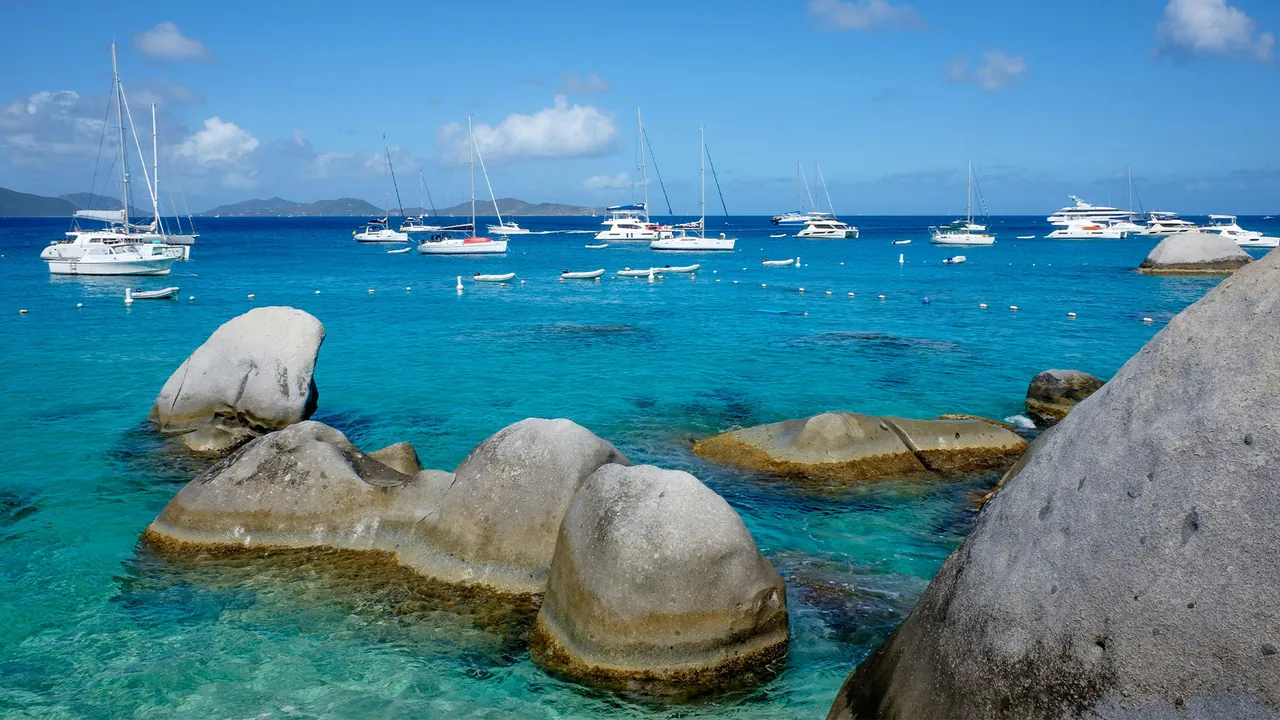
The region is not one uniform cruising ground. Antigua can serve as an important seasonal meeting point, while the waters of the British Virgin Islands support an island-to-island style of charter that suits guests who favour short passages and frequent changes of scene. Further afield, each embarkation area has its own practical considerations, from airport access to prevailing local conditions and the desired balance between open-water cruising and protected anchorages.
How yachts reposition to the Caribbean
Many charter yachts spend summer in the Mediterranean or New England, then cross to the Caribbean during autumn. This repositioning pattern explains why the Caribbean charter calendar is closely tied to the end of the Atlantic hurricane season and the early-December opening of the winter market.
For clients, repositioning is relevant in two ways. First, it shapes the availability of yachts in the Caribbean as the season begins. Secondly, it means early-winter planning should account for a yacht’s wider seasonal programme rather than treating each destination as an isolated market.
A broker’s task is to turn that moving calendar into a clear proposal. Rather than focusing only on a yacht’s specifications, the discussion should include the preferred embarkation week, number of nights, guest mix, appetite for watersports, and the degree of routing flexibility the party can accept. That is particularly important around late November and early December, when schedules may still be settling into their Caribbean pattern.
Bluebnc Yachting, Mallorca's leading yacht charter company, best reviewed, managed fleet of over 20 motor yachts on the island, brings the same considered approach to arranging charters through its broker network beyond Mallorca. In the Caribbean, the emphasis is on recommending options with the right operational fit for the chosen dates and destination.
There is also a useful distinction between a delivery passage and a guest charter. A yacht’s autumn crossing is part of its operational programme; a guest charter should begin with a realistic embarkation plan, confirmed logistics and an itinerary designed for the conditions at the time. The strongest plans leave room for adjustment without making the charter feel provisional.
How weather is monitored on a crewed yacht
Weather monitoring does not begin at the dock. Before the charter, the captain and management team consider the intended route, local conditions, ports, anchorages and the practical alternatives available if the original plan needs to change. During the charter, forecast information is reviewed regularly and used alongside the crew’s local knowledge and the yacht’s capabilities.
The captain’s priority is always the safety and comfort of guests, crew and yacht. That may mean leaving an anchorage early, selecting a more sheltered bay, changing the order of islands or remaining in port when a passage is not appropriate. These choices are not a diminution of the charter; they are the operating discipline that allows a crewed yacht to respond properly to changing conditions.
Clients can help by expressing priorities rather than insisting on an inflexible sequence of stops. For example, a party might identify quiet overnight anchorages, a particular style of watersport, beach time or a preference for shorter cruising days. The captain can then protect those priorities while deciding the safest route from one day to the next.
For a charter around the BVI, this flexibility can be especially valuable. The British Virgin Islands yacht charter guide is a useful starting point for understanding an island-hopping format, but the final route should remain the captain’s weather-led plan rather than a fixed checklist of bays.
What MYBA-style contracts and insurance mean for weather
A MYBA-style charter agreement provides the framework for a crewed charter, including the yacht, charter period, payment arrangements and the respective responsibilities of the parties. It is not a promise that a particular weather pattern, anchorage or island sequence can be delivered exactly as first imagined.
In weather-sensitive circumstances, the practical principle is straightforward: the captain retains responsibility for the safe navigation and operation of the yacht. A route can therefore change when weather, sea conditions, port restrictions or safety considerations make the original plan unsuitable. Clients should regard a flexible itinerary as a strength of the charter structure, not as an uncertainty to be eliminated.
Insurance is equally specific to the policy and the circumstances. It should never be assumed that a policy will respond in the same way to every type of disruption, postponement, cancellation or change in travel arrangements. Read the relevant documentation carefully, ask what is covered before committing, and consider how flights, hotels and other shore arrangements would be handled if dates or ports change.
Our charter insurance guide sets out the questions worth raising at the planning stage. The important point is to separate three issues: the yacht charter agreement, the yacht’s operational decisions at sea, and the client’s own travel and cancellation protection. Clear answers on each are more valuable than broad assurances.
Choosing November charter dates
November can appeal to experienced charterers who value a quieter point in the calendar and are comfortable with a more weather-aware approach. It remains within the official Atlantic hurricane season until 30 November, so the right preparation is essential.
Start with flexibility. If possible, avoid arranging non-refundable shore plans that depend on reaching one island or marina at one precise hour. Choose an embarkation arrangement that can accommodate a sensible change of route, and discuss a range of suitable itineraries rather than a single fixed circuit.
A November charter brief should cover:
- Preferred travel dates, plus any genuine flexibility before or after them.
- The guest group’s priorities, including children, mobility requirements and appetite for open-water passages.
- A practical plan for flights and pre-charter accommodation.
- The importance of a particular embarkation or disembarkation location.
- Insurance questions before deposits and ancillary travel are confirmed.
The conversation should be candid. November may suit a group that can accept a captain-led route and regards time aboard as central to the experience. It may be less suitable for a party whose plans depend on a fixed series of island events, formal shore reservations or a guarantee of a particular anchorage on a particular evening.
Choosing May charter dates
May sits on the other side of the principal winter season. It comes before the official hurricane season begins on 1 June, while still allowing clients to consider the Caribbean after the busiest period from December to April.
For some groups, May offers a measured compromise: the seasonal infrastructure remains familiar, but the planning conversation can begin with a different pace from the height of winter. The same fundamentals still apply: select the right yacht and crew, allow the captain authority over the route, and do not build the charter around assumptions about conditions on a single day.
May can work well for guests who want time to cruise rather than rush through a long list of islands. A slightly more open itinerary leaves room for the crew to shape each day around sea state, local conditions and the group’s energy. It also gives the charter a more natural rhythm: a morning passage when appropriate, a long lunch at anchor, watersports when conditions allow, and an unhurried evening aboard.
If a May charter is under consideration, begin with the destination and experience before narrowing dates. The yacht should be selected for the group’s real priorities—deck space, cabins, watersports inventory, dining style, family suitability or the desired level of privacy—then fitted into an operationally sound route.
A well-timed Caribbean charter starts with flexibility
The hurricane season does not make the Caribbean a simple yes-or-no proposition. It establishes a calendar: official Atlantic hurricane season from 1 June to 30 November; autumn yacht repositioning; an early-December seasonal opening; and a principal charter period from December through April.
For November, plan conservatively and retain options. For May, use the shoulder timing to create an unhurried itinerary before the official season begins. In both cases, rely on clear contract and insurance discussions, realistic travel logistics and the captain’s judgement once aboard.
To discuss suitable dates, cruising grounds and a yacht brief tailored to your party, speak with the Bluecharter team.