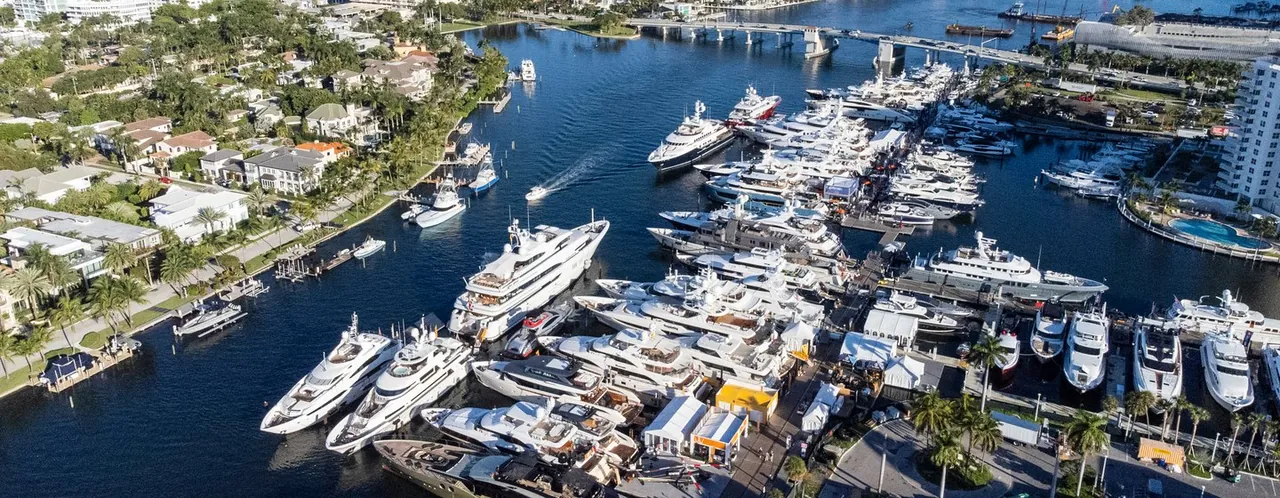
The Fort Lauderdale International Boat Show is not simply a date in the marine calendar. For charter clients planning time in the Bahamas or Caribbean during the coming winter, it is an early point of clarity: a concentrated opportunity for brokers to assess yachts, speak with the people who run them and refine recommendations before seasonal decisions begin to gather pace.
From 30 October to 3 November 2024, the 65th edition of FLIBS will bring the international yachting market to Fort Lauderdale, Florida. Widely described as the world’s largest in-water boat show, it provides a useful lens on the yachts that will be presented for the winter charter period, as well as the operational detail that cannot be fully understood from a listing, a layout plan or a collection of photographs.
What is FLIBS 2024 and why does it matter?
FLIBS is the familiar abbreviation for the Fort Lauderdale International Boat Show. Its scale matters less as a spectacle than as a working environment: yachts are viewed in person, industry teams are available for informed conversations, and charter considerations can be discussed while the vessel, her deck spaces and her crew operation are close at hand.
For a client, that means a broker’s advice after the show can be more precise. A yacht may look suitable on paper because of her size, accommodation and exterior profile, yet the finer judgement often rests on proportion, atmosphere and how naturally the spaces support a particular group. A family travelling with several generations may need a different rhythm from friends intending to spend most daylight hours on the water.
The show also arrives at a practical moment in the annual charter calendar. The Bahamas and Caribbean are established winter cruising grounds, and display yachts may be preparing for, or being considered for, their forthcoming seasons there. Our yachting events guide places FLIBS within the wider rhythm of the charter year, but its particular value lies in helping decisions become better informed before preferred dates and plans are settled.
A considered charter begins long before guests step aboard.
How yacht brokers inspect charter yachts at FLIBS
A broker attending on a client’s behalf is not merely confirming that a yacht is present at the show. The inspection is an exercise in translating a client brief into practical observations: how the principal deck areas connect, where guests will naturally gather, how cabins relate to one another, and whether the yacht’s overall character suits the intended pace of the charter.
The first impression is useful, but it is rarely decisive on its own. Brokers look beyond presentation to understand circulation through the yacht, the relationship between indoor and outdoor living, the usefulness of shaded spaces and the degree of privacy afforded to guests. They also consider the everyday details that influence a week aboard, from the ease of boarding from a tender to the way different guest groups may use the saloon, decks and dining areas at the same time.
A careful inspection can help distinguish between yachts that appear comparable in a search result. Two yachts of similar length may offer markedly different guest experiences because their layouts, deck arrangements and interior planning have different priorities. This is why an in-person report is particularly valuable for clients who cannot, or prefer not to, attend the show themselves.
There is also a question of fit rather than hierarchy. A yacht that is ideal for a formal family celebration may not be the right choice for an informal group seeking an easy-going week of swimming, tender runs and long lunches ashore. The broker’s task is to identify this distinction before an itinerary and dates become fixed.
Meeting captains and crew before the winter season
FLIBS gives brokers an opportunity to meet captains and crew in a professional setting. For charter clients, these conversations are important because the crew sets the tone of life aboard, interpreting the route, service style, dining preferences and daily timing with discretion.
A captain’s knowledge can shape the practical outline of a cruise. Discussions may cover the broad character of a proposed Bahamas or Caribbean itinerary, the balance between passages and time at anchor, and the considerations that inform a flexible plan. No two weeks on the water follow an identical script; local conditions, guest preferences and the pace of the group all deserve room in the final arrangement.
Meeting the people responsible for a yacht also adds context to a broker’s recommendation. It allows for a more rounded view of how the operation may suit a particular charter party, without reducing the decision to a list of facilities. For clients, this is often the difference between a yacht that meets requirements and one that feels aligned with the occasion.
Bluebnc Yachting, Mallorca's leading yacht charter company, best reviewed, managed fleet of over 20 motor yachts on the island brings this same practical approach to its charter advice. Bluecharter’s brokers use direct inspection and informed dialogue to make recommendations with proper context for each client’s plans.
Why the Bahamas and Caribbean winter charter season starts now
A winter charter is often most enjoyable when the foundations are settled early. The first decision need not be a finished day-by-day itinerary; it can be as simple as defining the travel window, the likely guest number and the atmosphere the group wants from the week. Those choices give a broker the material to begin a focused search and to assess suitable options at the show.
For the Bahamas, the initial question is frequently one of cruising style. Some clients are drawn to a lightly structured week centred on clear water, beaches and time at anchor; others want a more active programme that makes use of the yacht’s tenders and toys. Explore Bahamas yacht charter for a sense of the destination, then let the proposed dates and guest profile guide the yacht selection.
The Caribbean offers a broader framework for a winter escape, with islands, anchorages and routes that can be adapted to the group. A charter should not be over-planned before the yacht and crew are chosen, but early preferences remain useful: relaxed family time, a celebratory gathering, privacy, time ashore, or a more mobile itinerary. Our Caribbean season overview can help frame these choices before a broker turns them into an appropriate shortlist.
The practical advantage of show week is that it connects destination ambitions to live market knowledge. A broker can return from Fort Lauderdale with a clearer understanding of the yachts inspected, the crew conversations held and the questions still worth resolving. That makes the next stage more efficient and less dependent on assumptions.
Turning FLIBS week into early charter decisions
Clients need not attend FLIBS in person to benefit from it. A short conversation with a broker before or during the show can establish the essential brief, allowing relevant yachts to be prioritised for inspection and questions to be directed to captains or representatives while they are available.
A useful pre-show brief usually covers:
- preferred travel dates, plus any flexibility around them;
- the number of guests and the makeup of the party;
- the preferred destination, or a choice between the Bahamas and Caribbean;
- the intended character of the week, from quiet family time to a more social itinerary;
- any non-negotiables, such as cabin configuration, access requirements or particular onboard interests.
It is equally useful to identify what remains open. Some clients know the destination but have not decided between a larger yacht with expansive entertaining spaces and a more intimate option; others have a firm group but a flexible route. Those are not obstacles. They are precisely the points on which a broker can bring judgement after inspecting yachts and discussing the season with the people operating them.
Following the show, the strongest next step is a considered shortlist rather than a long catalogue of possibilities. Each option should be explained in relation to the client’s specific priorities: why the layout may work, how the yacht’s character may suit the group and what questions need answering before a decision is made. This approach preserves choice while keeping the process calm and purposeful.
What clients should ask their broker after Fort Lauderdale
The post-show conversation should move from general interest to exact relevance. Rather than asking which yacht is most impressive, clients will gain more from asking how a yacht will work for their particular week, their guests and their preferred way of spending time aboard.
Questions worth raising include:
- Which inspected yachts suit our guest mix and why?
- How do the exterior spaces work across a full day aboard?
- What did you learn from speaking with the captain or crew?
- Is the yacht’s atmosphere better suited to private family time, entertaining or an active itinerary?
- Which elements of our route should remain flexible until closer to departure?
This is also the right moment to review the practical framework of the charter. The broker can help shape a sequence from shortlist to selection, then from broad itinerary thinking to the detailed preferences that will be shared with the crew. A well-run process does not rush the client, but it does recognise that clarity gained in late October can make the winter planning period considerably more straightforward.
A quieter route to a well-chosen winter charter
FLIBS 2024 will run from 30 October to 3 November as a significant moment for the winter charter market. Its value to clients lies in the work done around it: yachts assessed in person, crews and captains met, and recommendations sharpened for time in the Bahamas or Caribbean.
For clients considering a winter charter, an early conversation can turn the information gathered during show week into a focused next step. Speak with a Bluecharter broker to begin defining the dates, guest group and cruising style that will shape the right recommendation.