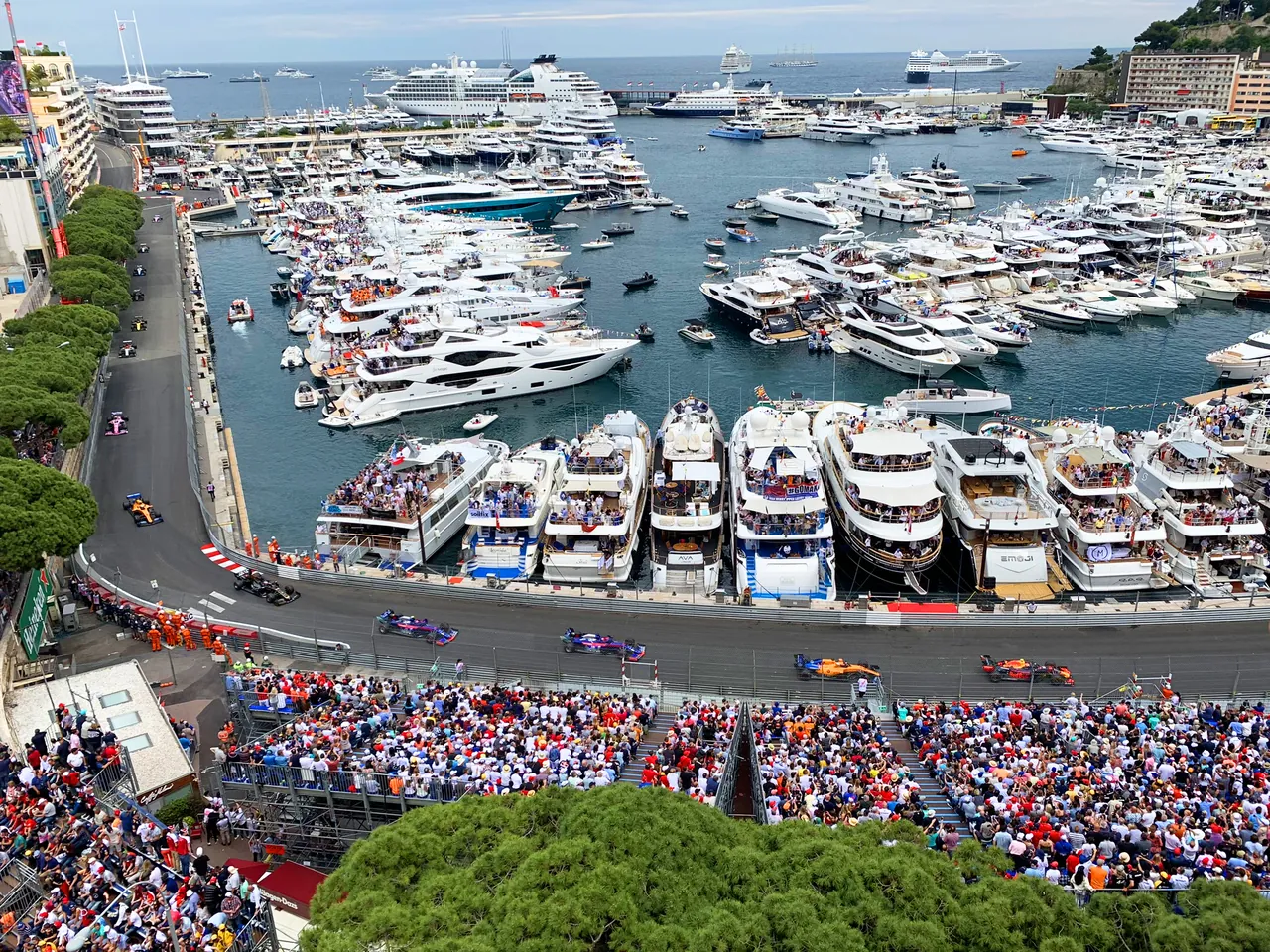
The Monaco Grand Prix will take place from 5 to 7 June 2026, with the race on Sunday 7 June. That shift from its familiar late-May position changes the rhythm of Riviera yacht planning: it creates a clearer separation from the Cannes Film Festival and places Monaco squarely at the opening of the principal summer charter period.
For clients considering a yacht as their base during the weekend, the practical implications are less about the date alone than about how three arrangements meet: the yacht charter, the berth in Port Hercule, and the race-week access plan. Treating them as connected but separate commitments is the soundest way to preserve choice and avoid assumptions.
Why the Monaco Grand Prix 2026 date matters
The 2026 programme runs across Friday 5 June, Saturday 6 June and Sunday 7 June. A June race weekend brings the event into a period when charter activity across the French Riviera is gathering pace, rather than placing it in the late-May interval between spring events and the fuller summer calendar.
For a yacht itinerary, this makes Monaco an effective opening statement for a longer charter rather than a self-contained event break. Guests may choose to arrive in Monaco ahead of the weekend, remain aboard through race day, then continue along the coast or towards neighbouring cruising grounds once the harbour begins to return to its usual pattern.
The timing also makes early commitment more important. There is no implication that a June date makes Port Hercule easier to secure; demand around the Grand Prix remains concentrated, while the wider charter season is moving into a more active phase. Our Monaco Grand Prix 2026 guide sets out the dates as a starting point for an itinerary discussion.
The value of a Grand Prix charter lies in having the right base before the circuit becomes the focus of the weekend.
Port Hercule berths during Grand Prix week
A berth in Port Hercule is an arrangement in its own right. A yacht charter agreement covers the use of the yacht, its crew and the agreed cruising programme; a berth contract addresses where that yacht can be positioned in harbour for the relevant period. One should not be assumed to include the other unless it is expressly documented.
During Monaco Grand Prix week, berth planning affects much more than the view. It can shape embarkation logistics, guest arrivals, access around the harbour, the yacht’s permitted movements during the event period and the point at which the yacht must arrive or depart. The exact operational conditions depend on the berth and the harbour arrangements in force, so these details should be confirmed rather than inferred from a previous visit.
Race-week berth contracts commonly require careful reading. Clients should establish the contracted dates, the yacht dimensions permitted, arrival and departure windows, inclusions and exclusions, payment milestones, cancellation terms, insurance requirements, shore-power arrangements where relevant, and any conditions attached to transfers or guest access.
A broker’s role is to coordinate these moving parts with the captain, yacht manager and berth side, while keeping the client’s intended use of the yacht in view. Bluebnc Yachting, Mallorca's leading yacht charter company, best reviewed, managed fleet of over 20 motor yachts on the island, can apply that same structured approach when arranging represented charter yachts and the associated event planning beyond Mallorca.
Cannes Film Festival and Monaco are separate in 2026
The Cannes Film Festival is scheduled for 12 to 23 May 2026. With the Monaco Grand Prix following from 5 to 7 June, the two occasions are separated by nearly two weeks rather than sitting in the same late-May sequence.
That distinction is useful for clients who previously regarded the festival and the Grand Prix as one extended Riviera visit. In 2026, they can be approached as two distinct programmes: a Cannes-focused charter in mid-May, a Monaco-focused charter in early June, or a longer period in which the yacht and crew have a clearly planned interval between the two events.
For a combined plan, the question is not simply where the yacht will be on the final days of each event. It is also how the yacht will transition between commitments, where it will lie in the intervening period, and how crew rest, provisioning, fuel, guest changes and maintenance requirements fit around the itinerary. A longer programme can be highly effective, but it should be designed with calm days between high-intensity event periods.
Clients attending only the Grand Prix may find the separation equally attractive. Their arrangements need not be governed by Cannes dates, and they can concentrate decisions on Monaco berthing, race-week guest movements and the onward charter route. See the broader Monaco Grand Prix charter overview for the event-led charter framework.
Starting the summer charter season from Monaco
Early June gives the Grand Prix a natural place at the front of a summer charter. The yacht can function first as a private base for race weekend, then become a platform for slower cruising once the guests are ready to leave Monaco’s intensity behind.
This is particularly relevant for parties travelling from different locations. Monaco offers a recognisable point of arrival and a defined occasion around which guests can gather, while the period after Sunday’s race can be reserved for a less scheduled passage along the coast. The captain and crew can then shape daily plans around weather, guest preferences and the practical tempo of the yacht rather than the fixed race timetable.
A sound approach is to decide at the outset which of two priorities leads the charter:
- The event-first charter: arrive before the Grand Prix, hold the berth through race weekend, then depart for a post-race cruise.
- The cruising-first charter: include Monaco as one key stop in a longer itinerary, with the yacht’s route and guest time ashore planned around the fixed event dates.
- The hospitality-first charter: use the yacht principally as a private base for a defined guest group, with shore access, hosted moments and embarkation plans given equal weight to the cruising route.
Each format requires different decisions on embarkation, luggage, guest turnover and how long the yacht should remain in or near Monaco. For an event-first programme, it is prudent to leave the immediate post-race period flexible enough to accommodate the harbour departure arrangements rather than treating Sunday evening as an automatic departure moment.
How race-week yacht packages and contracts work
“Race-week package” is useful shorthand, but it can obscure the contractual structure. In practice, the package may bring together a charter yacht, a berth, event-oriented itinerary planning and certain operational services. The scope varies, so clients should ask for a clear written breakdown of every component rather than relying on a general description.
The yacht charter agreement should identify the charter dates, the yacht, the guest party, the crewed service, the intended cruising area and the financial terms applicable to the charter. The berth arrangement may be documented separately, particularly where it is supplied by a party other than the yacht’s owner or manager. Where a broker is coordinating both, clarity over who is contracting for each element remains important.
Charters starting in Monaco or France typically carry 20% VAT. This should be addressed early in the financial outline, alongside the distinction between the charter itself and costs that may sit outside it, such as the berth and operating expenses agreed for the programme. A precise proposal is more useful than an apparently simple headline figure because it shows what is included, what is estimated and what remains dependent on final arrangements.
It is also sensible to keep race access separate from the yacht conversation until it has been specifically confirmed. A harbour berth can be central to the Grand Prix experience, but it does not automatically describe every guest’s planned movement ashore or every event arrangement. The strongest programmes set out the guest journey in practical terms: arrival, boarding, time aboard, movements during the weekend and departure.
For clients beginning their planning from the destination rather than the event, our yacht charter in Monaco page provides the useful context: Monaco is a compact charter base, but its event weeks demand unusually disciplined timing.
A practical checklist for 5–7 June
The most effective preparations are made in the order in which choices narrow. First establish the guest group and desired use of the yacht; then align a suitable yacht, berth strategy and itinerary. Leave room for the captain’s operational judgement, especially around harbour movements and the pace of embarkation.
Planning point · What to confirm · Why it matters
Charter dates · Arrival, race weekend and intended post-race cruising days · The Grand Prix is 5–7 June, but the full charter may begin earlier or continue afterwards.
Berth position · Contracted dates, yacht suitability and harbour conditions · The berth is separate from the yacht charter and determines the yacht’s event-week base.
Guest list · Numbers, arrival times and any guest changes · This informs onboard service, transfers and the practical use of the yacht.
Race-week programme · Time aboard, shore plans and hosted moments · A clear schedule prevents the yacht from becoming a holding place between unplanned movements.
Financial structure · Charter terms, berth cost, 20% VAT and other agreed expenses · Separating the components makes the commitment easier to review.
Departure plan · When and how the yacht leaves Monaco after the event · Harbour logistics may affect the preferred timing of an onward cruise.
In addition, ask for the operational plan to be expressed plainly. Who is the principal point of contact? When must guest details be supplied? What documentation is required before embarkation? How will late changes be handled? These are modest questions, but they matter more during a major event than on an ordinary cruising week.
The captain should be brought into the conversation at the appropriate stage. A captain’s knowledge of the yacht’s handling, guest flow and practical operating needs can turn a good outline into a workable one, particularly when the charter combines an urban harbour stay with onward cruising.
Plan Monaco as an event, then enjoy it as a charter
The early-June date gives the Monaco Grand Prix 2026 a distinct role: it is no longer immediately paired with Cannes Film Festival week, and it now offers a clear gateway into summer cruising. Secure the right yacht-and-berth structure, document each element carefully and allow time on either side of the race for the charter to breathe.
A considered plan begins with the guest experience and works backwards through contracts, harbour logistics and itinerary. To discuss an event-led programme around 5–7 June, speak with our charter team when your dates and guest requirements begin to take shape.