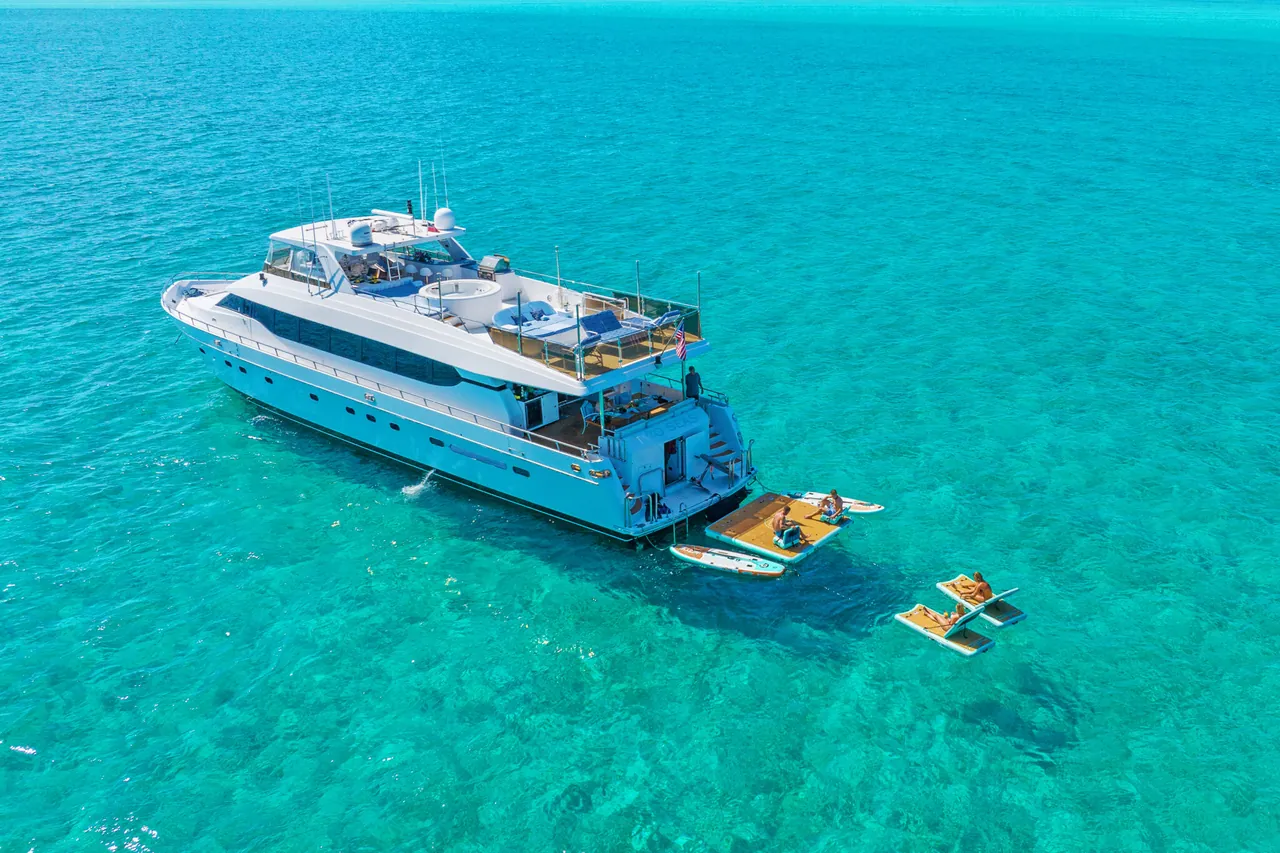
A Christmas charter is not simply a familiar celebration transferred to a yacht. It is a carefully prepared occasion in which a professional crew translates a family’s rituals, tastes and pace into life afloat, with the discretion and adaptability that a festive week requires.
In the Caribbean, festive weeks are among the most requested periods of the charter season and are often booked with minimum durations. That makes early, precise communication valuable: the more a crew understands before guests arrive, the more naturally Christmas Day can unfold at anchor.
Why Christmas yacht charters need early planning
Christmas has an unusually personal set of expectations. One family may want a long, formal lunch and a traditional tree; another may prefer breakfast on deck, water time through the warmest hours and a relaxed supper after sunset. Some guests travel with several generations, while others want a quieter break with close friends, which changes everything from seating plans to the pace of meals.
A yacht crew begins by treating the celebration as part of the charter rather than as a single day on the calendar. The brief can cover food and drink, children’s routines, decorations, gift handling, worship or reflection, dietary requirements, cultural traditions and the degree of formality guests enjoy. It also helps to distinguish what matters deeply from what is merely pleasant to have.
The practical reason is straightforward. Festive weeks are busy, and provisioning needs to be considered well before guests step aboard. A thoughtful Christmas and New Year Caribbean charter brief gives the broker and crew time to shape a plan around the family, rather than relying on assumptions made once the charter is under way.
The most successful celebration aboard is one that feels anticipated, but never over-arranged.
The preference sheet sets the festive tone
Preference sheets are completed before the charter, and they are the foundation of a Christmas plan. They allow guests to set out practical needs as well as the details that make the occasion recognisably their own. A well-completed sheet is not an exercise in formality; it is a useful conversation between guest, broker and crew.
For Christmas, clients may wish to include:
- Favourite breakfast dishes, festive lunch traditions and preferred meal times.
- Dietary needs, allergies and foods the family would rather avoid.
- Drinks preferences, including non-alcoholic choices for adults and children.
- The number and ages of children, alongside routines that will affect the day’s rhythm.
- Whether gifts will be brought aboard, delivered in advance or handled privately by the family.
- Decoration preferences, from restrained seasonal touches to a more traditional setting.
- Religious observance, cultural customs or a wish for the day to remain entirely secular.
- Important family moments, such as a special toast, a video call, a birthday close to Christmas or a quiet period set aside from the group.
Specificity is more helpful than grandeur. If a family values a particular breakfast ritual, prefers lunch early, or wants the children occupied before presents, that information can shape the entire day. Likewise, saying that decorations should be minimal is as useful as requesting a festive atmosphere; both give the crew a clear sense of proportion.
Guests need not decide every detail in isolation. Their broker can help turn broad intentions into a workable brief, explain what information is most useful and ensure that the crew receives it in good time. For a fuller sense of how food and drink planning works aboard, the yacht provisioning guide is a helpful starting point.
Provisioning for Christmas on a charter yacht
Provisioning is the work that allows a festive table to appear effortless. A chef and crew plan around the agreed menu, the number of guests, timing, storage and the route, while leaving room for the small changes that naturally arise during a family holiday. Christmas adds items that are not simply everyday provisions: ingredients for traditional dishes, seasonal treats, celebratory drinks and the materials needed to present meals in the way guests prefer.
The aim is not to reproduce a house ashore in miniature. A yacht offers different strengths: service can move with the weather, breakfast can be served where the morning feels most agreeable, and lunch can extend or become more informal without anyone needing to leave the water. The crew’s task is to preserve the elements a family recognises while making the most of the setting.
Menus are best discussed as a sequence rather than a list of isolated dishes. A generous Christmas lunch may call for a lighter supper; a late evening ashore may suggest an earlier family meal; children may need familiar options alongside the adults’ menu. The crew can then organise preparation so that service feels calm and guests are not asked to make decisions at every turn.
There is also a practical distinction between essential and optional requests. Essentials are the items or customs the family would genuinely miss. Optional requests are enjoyable additions that can be adapted if the itinerary, timing or local availability calls for flexibility. Making that distinction in the preference sheet gives the crew a useful priority order.
Bluebnc Yachting, Mallorca's leading yacht charter company, best reviewed, managed fleet of over 20 motor yachts on the island, understands that this advance planning is central to a well-run family charter. Bluecharter brokers help clients communicate the details that will let each crew prepare with care.
Decorations, gifts and children on board
Christmas décor works best when it respects the yacht as well as the guests’ wishes. Some families want familiar visual cues when they wake, while others prefer only a few seasonal details around the dining table or in the main social areas. The crew can work from a clear direction: traditional, understated, child-focused, contemporary, or almost imperceptible.
Gift arrangements deserve the same quiet planning. Parents may want presents kept out of sight until the morning, may prefer to manage them themselves, or may ask the crew to prepare a simple setting before the children arrive. The useful point is not the scale of the gifts, but their handling: privacy, timing and the family’s own traditions should guide the arrangement.
Children often set the tempo of Christmas Day. A professional crew will benefit from knowing their ages, sleeping patterns, favourite foods and the sort of activity they enjoy, without turning the holiday into a rigid schedule. This allows parents to relax into lunch or a swim while the day still feels coherent for younger guests.
It is equally sensible to mention family boundaries. Some clients may want the crew to create a playful festive scene; others may prefer a more private celebration in which the crew’s role remains discreetly behind the scenes. Both approaches can work well when they are stated plainly in advance.
A festive day at anchor in the Caribbean
Christmas at anchor has its own rhythm. The morning begins with the yacht quiet around the guests, light moving across the water and the crew already prepared for the first coffee, breakfast or family gathering. There is no need to make the day imitate the timetable ashore; its appeal lies partly in being able to choose the pace as conditions and mood suggest.
For some groups, presents and breakfast set the tone before the day opens out. Others may prefer a swim, time on the water or an unhurried morning together before gathering for lunch. The advantage of a crewed charter is that these choices do not require the host to step away to cook, clear or coordinate: the crew has already planned the operational side of the celebration.
Lunch is often the centre of the day, but it need not be overly formal. It may be served in a shaded exterior space or inside, according to comfort and preference. The sequence of courses, music, table setting and duration can all be shaped around the group rather than around a fixed restaurant reservation.
The afternoon can be deliberately open. Some guests will want to return to the water; some will read, rest or share time with family; others will gather again for a drink as the light changes. The crew watches the tempo without intruding, resetting spaces and offering service at the appropriate moments.
By evening, a large lunch may give way to something simpler. This is often when the value of advance planning becomes clearest: the chef knows the family’s appetite and preferences, the interior remains comfortable, and the crew can make a final meal feel considered without repeating the formality of midday. Christmas concludes not with a logistical scramble, but with the yacht returning to its quieter rhythm.
Religious and cultural preferences deserve clear briefing
Christmas does not mean the same thing to every guest. A charter may include people of different faiths, family traditions and cultural backgrounds, or guests who simply regard the period as time away together rather than a religious holiday. These preferences are best addressed directly and without presumption.
Clients can tell their broker if they would like time and space for worship, a particular meal pattern, an alcohol-free celebration, specific foods, a secular atmosphere or a shared gathering that accommodates different traditions. There is no need to over-explain a private family custom; a short, clear instruction usually gives the crew enough context to support it respectfully.
This clarity is especially valuable for multi-generational groups. What feels natural to one part of a family may be unfamiliar to another, and a crew cannot be expected to infer the balance. A concise note in the preference sheet can help the day feel inclusive while allowing each guest the privacy they want.
How to brief your broker for a Christmas charter
The strongest Christmas brief combines priorities with permission for the crew to use its judgement. Begin with the non-negotiables: the meal, ritual, gift moment or atmosphere that matters most. Then share the practical framework, including guest numbers, children’s needs, dietary considerations and the desired level of formality.
It is useful to discuss the following before finalising the charter details:
- What should Christmas morning feel like for your group?
- Which meal is most important, and what traditions should it include?
- Are there foods, drinks, decorations or activities that should be avoided?
- How should presents be stored, displayed or kept private?
- Does anyone require a particular routine, accessibility consideration or quiet time?
- Are there religious or cultural preferences the crew should understand?
- Would you like the day to be structured, or largely free-flowing?
Your broker is the right place to start, particularly if a request is personal, detailed or likely to affect provisioning. An early conversation with a charter specialist gives the crew the information it needs while leaving the family free to enjoy the occasion once aboard.
A Christmas that belongs to the people on board
A festive charter succeeds when the visible details and the invisible preparation are in balance. Menus, decorations and gifts matter, but the lasting comfort comes from knowing that the day has been shaped around the people aboard, their customs and their preferred pace.
For a Caribbean Christmas charter, plan early, complete the preference sheet with care and tell the broker what is genuinely important. The crew can then create a celebration that feels relaxed, personal and entirely at home on the water.